




Cargando...
Acid-free
14,96€
16,63€
Contenido: 500mlPrecio unitario (29,92€
/ l)
Agotado
IVA incluido: 2,49€ (20%), más envío, se calcula al momento de pagar
Koch-Chemie Magic Wheel Cleaner "Mwc" Limpiador de llantas - 500 ml está agotado y se enviará tan pronto como vuelva a estar disponible.
26 disponibles
— Listo para envío inmediato
Se ha añadido el artículo al carrito
Ver carrito
Formas de pago aceptadas
Schnellbestellung
| Koch-ChemieMagic Wheel Cleaner "Mwc" Limpiador de llantas 500 ml Disponibles (26 unidades)
|
14,96€
Contenido: 500mlPrecio unitario (29,92€
/ l)
Agotado
|
||
| Koch-ChemieMagic Wheel Cleaner "Mwc" Limpiador de llantas 2x 500ml Disponibles (13 unidades)
|
32,59€
Contenido: 1000mlPrecio unitario (32,59€
/ l)
Agotado
|
||
| Koch-ChemieMagic Wheel Cleaner "Mwc" Limpiador de llantas 3 x 500ml Disponibles (8 unidades)
|
48,38€
Contenido: 1500mlPrecio unitario (32,25€
/ l)
Agotado
|
||
| Koch-ChemieMagic Wheel Cleaner "Mwc" Limpiador de llantas 10 liters Muy poca disponibilidad (1 unidad)
|
136,98€
Contenido: 10lPrecio unitario (13,70€
/ l)
Agotado
|
Limpiallantas sin ácido con viraje de color para uso diario en taller
Limpiallantas sin ácido con viraje de color para uso diario en taller
Preguntas y ayuda
Preguntas y ayuda
¿Tienes dudas o necesitas ayuda?
Estamos seguros de que nuestra página de ayuda te servirá. Allí encontrarás cómo contactarnos y las respuestas a las preguntas más frecuentes.
¿No lo has encontrado? Escríbenos un mensaje en el chat.
Envío y entrega
Envío y entrega
Envío internacional rápido a tu país con FedEx, DPD o tu servicio postal nacional, plazo de entrega 1-4 días. Los precios incluyen el IVA de tu país.
Todos los métodos de envío, tarifas y tramos de peso están en nuestra política de envío.
Recogida en tienda
Recogida en tienda
Tienda de cuidado del coche en Nordhorn
¿Para qué esperar si puede ser rápido? Pide tus productos de cuidado del coche online y elige la recogida cómoda o nuestra entrega exprés, en local o en toda Europa. Lo tenemos todo pensado para darte la máxima flexibilidad y comodidad, para que tu coche esté siempre en plena forma.
Puedes recoger tu pedido siempre de martes a viernes de 10:00 a 17:00 en Bosinks Kamp 8, 48531 Nordhorn, en Detailing1. Ten a mano tu confirmación de recogida. ¡Te esperamos!
No se ha podido cargar la disponibilidad de recogida

14,96€
16,63€
Contenido: 500mlPrecio unitario (29,92€
/ l)
Agotado
Disolver el polvo de freno químicamente en llantas pulidas
¿Qué es el Koch-Chemie Magic Wheel Cleaner? Un limpiador de llantas sin ácido y viscoso, de la línea workshop de Koch-Chemie, que disuelve químicamente el polvo de freno y el óxido volante de forma visible, mediante un viraje de color rojo-violeta. Apto para aluminio pintado, aluminio pulido, cromo y acero. No apto para alquitrán incrustado ni manchas de betún.
El Koch-Chemie Magic Wheel Cleaner — al que internamente solemos llamar "MWC" — es un limpiador de llantas sin ácido de la línea workshop de Koch-Chemie. El principio activo, el mercaptoacetato de amonio, una sal del ácido tioglícolico, reacciona con los compuestos de hierro(III) del polvo de freno y los despega de la superficie de la llanta como un complejo rojo-violeta. El viraje de color no es un truco de marketing sino la reacción química en sí: donde ves violeta, el hierro se está convirtiendo justo en ese momento. Con un pH de 5–6 la fórmula sigue siendo suave con las llantas de aluminio pintadas y pulidas, el cromo y el acero. La alta viscosidad de 50 mPa·s hace que el producto se agarre a las caras verticales de la llanta en vez de escurrirse de inmediato — así mantienes el tiempo de actuación completo sobre el material.
- Viraje rojo-violeta como indicador de reacción. Nada de adivinar cuánto hay que esperar. Ves en tiempo real dónde reaccionan las partículas de hierro y cuándo termina la reacción. Eso elimina dos errores clásicos: aclarar demasiado pronto (limpieza incompleta) y dejarlo actuar demasiado tiempo (el producto se satura y se seca encima).
- Viscosidad como de jarabe para agarrarse en vertical. A 50 mPa·s el Magic Wheel Cleaner es lo bastante espeso para quedarse en los radios y en el flanco de la llanta sin gotear de inmediato al suelo. Eso lo diferencia de los limpiadores de llantas acuosos, donde la mitad del producto se escurriría sin usarse.
- Un solo limpiador para todo tu parque de llantas. Aluminio pintado, aluminio pulido, cromo y acero — el pH de 5–6 es lo bastante suave para usarse incluso en llantas forjadas pulidas a espejo. En llantas anodizadas o con recubrimiento mate, primero pruebas en una zona oculta.
Lo que vemos en el día a día: Pulveriza siempre sobre una llanta fría y seca — nunca al sol directo, nunca sobre frenos calientes después de conducir. Las superficies calientes hacen que el gel se seque, y eso deja residuos que luego tienes que quitar con el cepillo. En llantas muy sucias tras meses sin limpiar, dos pasadas cortas funcionan mejor que una larga: el principio activo está químicamente saturado tras unos 5 minutos. Lo dejas actuar dos veces 3 minutos y aclaras entre medias.
Llanta fría. Pulverizas. Esperas de 2 a 5 minutos.
Pulveriza el Magic Wheel Cleaner sobre la llanta fría y seca — cubre de forma uniforme radios, canal, pestaña y tornillos de rueda. Gracias a la consistencia como de jarabe el producto se agarra en vertical sin que tengas que cambiar tu forma de currar. Lo mejor es ir de abajo hacia arriba, para no cubrir caras ya mojadas.
A los 30-60 segundos arranca el viraje: primero en las zonas con mucho polvo de freno, luego por toda la cara. Los churretones rojo-violeta te enseñan exactamente dónde se están convirtiendo las partículas de hierro. Tras 2 a 5 minutos de actuación la reacción termina — esperar más no aporta nada, porque el principio activo se satura tras unos 5 minutos. Un fallo habitual es dejar el producto 10 minutos esperando un mejor resultado. Pasa lo contrario: la solución empieza a secarse y deja churretones.
Para terminar, aclara con un buen chorro de agua de la hidrolimpiadora o la manguera, de arriba hacia abajo. Con mucho polvo de freno entre radios estrechos un cepillo para llantas puede ayudar a repartir el material disuelto — no para fregar, solo para rematar. Quien limpia cada semana o cada dos, normalmente se apaña con una sola pasada.
Un apunte sobre la dosis: 500 ml dan para unas 10 limpiezas completas de vehículo. Por rueda bastan 40 a 50 ml. Eso sale a 1,25 euros por aplicación completa — mucho más rentable de lo que el precio del bote hace pensar, una vez que lo pones en la balanza con el tiempo que pierdes fregando a mano con limpiadores menos eficaces.
Las partículas de hierro las disuelve. El alquitrán no.
El Magic Wheel Cleaner está hecho con precisión para una tarea: disolver químicamente el polvo de freno y el óxido volante. La reacción entre el mercaptoacetato de amonio y los iones hierro(III) del polvo de freno es el mecanismo — todo lo que no sea hierro no se ve atacado. Eso explica el viraje de color como herramienta de diagnóstico: que no haya color significa que no hay hierro, y en ese caso la falta de efecto no es una carencia del producto sino la respuesta correcta a la suciedad.
Como uso secundario, el Magic Wheel Cleaner también funciona en la pintura como descontaminante de hierro — especialmente interesante en vehículos aparcados bajo emisiones industriales o junto a vías de tren. Partículas finas de hierro se depositan ahí sobre el barniz y reaccionan con la fórmula MWC igual que en la llanta. Usado antes de pulir, aumenta el agarre del wax o del coating cerámico posterior, porque la superficie de la pintura está de verdad libre de contaminación.
Donde el MWC no es el producto adecuado: el alquitrán incrustado, las manchas de betún y la suciedad grasa no reaccionan con las sales de tioglicolato. Para eso necesitas un eliminador de alquitrán a base de disolvente. En llantas extremadamente descuidadas con polvo de freno de meses metido en los poros, también el más fuerte Koch-Chemie Reactive Wheel Cleaner puede ser la mejor opción — su sistema ácido es más potente, aunque no apto para todos los materiales de llanta. La decisión es clara: si lo que cuenta es la seguridad en cromo y llantas pulidas, MWC. Si necesitas la máxima fuerza de limpieza y trabajas con aluminio pintado y acero, RWC.
Un segundo caso en el que ningún limpiador de llantas del mundo ayuda ya: cuando la llanta está ya visiblemente corroída o el barniz se ha desconchado. En ese momento ya no se trata de limpieza, sino de renovación de la pintura. El Magic Wheel Cleaner es un producto de cuidado — no un producto de restauración.
Tu estándar para la rutina de ruedas regular
El Magic Wheel Cleaner es la opción acertada para todo el que cuida sus llantas con un ritmo regular y busca un producto con el que no tenga que pensar en la compatibilidad de materiales. Un producto, un paso, todas las ruedas hechas. Eso es lógica de workshop — y para eso exactamente está formulado el MWC.
Saca sus ventajas sobre todo cuando cuidas varios vehículos con distintos tipos de llanta o trabajas en una flota. En vez de tres limpiadores para tres tipos de llanta, basta con uno. Es menos fuerte con los restos de polvo de freno extremadamente incrustados de sistemas de frenado de alto rendimiento, o en llantas que llevan meses sin limpiar. En ambos casos tiene más sentido una segunda pasada o un producto más agresivo que alargar el tiempo de actuación.
Como solución completa el Magic Wheel Cleaner funciona mejor combinado con un prelavado como el Koch-Chemie Vorreiniger B, aplicado en espuma sobre toda la llanta antes de que el MWC entre en los radios. Cierre con un cuidado de neumáticos en el flanco — y la rutina de ruedas completa queda en unos 15 minutos por vehículo, si te mantienes cada dos semanas. Es el combo que más compran nuestros clientes: Vorreiniger B + Magic Wheel Cleaner. Un proceso preciso y repetible que funciona sin fregar.
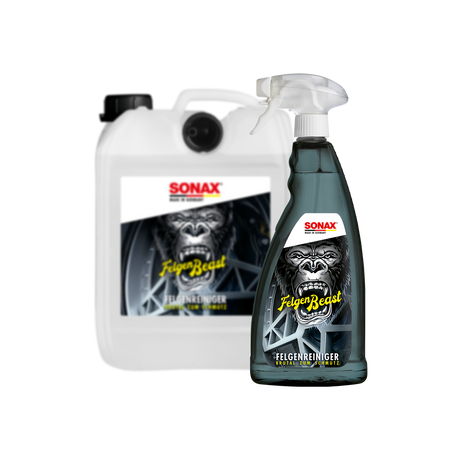
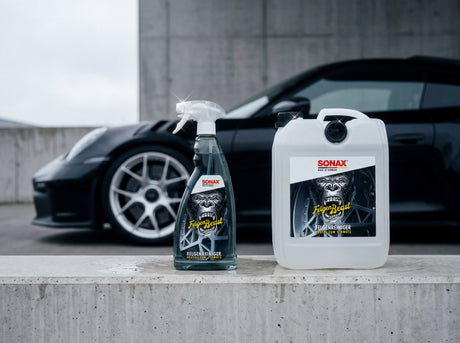
En el cara a cara con el clásico sin ácido SONAX FelgenBeast, el Magic Wheel Cleaner saca ventaja en dos puntos: la mayor viscosidad da más tiempo de contacto en la llanta, y la fórmula workshop está dosificada más fuerte para uso profesional. A cambio, el FelgenBeast tiene un olor más suave — si curras en un garaje cerrado, lo notas y mucho. El Magic Wheel Cleaner es el estándar de workshop. El FelgenBeast, el todoterreno de garaje. Ambos hacen su trabajo de forma fiable; la pregunta es cuál encaja en tu entorno de trabajo.
¿Dudas sobre Koch-Chemie Magic Wheel Cleaner "Mwc" Limpiador de llantas? Pide una explicación:
Añadir Detailing1 como fuente preferida en GoogleFrequently Asked Questions about Koch-Chemie Magic Wheel Cleaner
What exactly is the Koch-Chemie Magic Wheel Cleaner?
The Magic Wheel Cleaner, internally called "MWC", is an acid-free wheel cleaner from Koch-Chemie's workshop line. The active ingredient, ammonium mercaptoacetate, reacts with iron(III) compounds in brake dust and removes them from the wheel surface as a red-violet complex. The color change is not a dye but a direct chemical reaction. It is material-compatible with polished aluminum, painted aluminum, chrome, and steel at a pH value of 5 to 6.
How do I use Magic Wheel Cleaner correctly?
Spray evenly onto cold, dry rims from a distance of about 20 cm – include spokes, wheel well, rim flange, and wheel bolts. Allow to act for 2 to 5 minutes. After about 30 seconds, the red-violet color change begins. Then rinse off with a strong jet of water from top to bottom. For narrow spokes, use a wheel brush only for spreading, not for scrubbing.
What is the difference to Reactive Wheel Cleaner?
Magic Wheel Cleaner is acid-free and suitable for all common rim materials, including polished aluminum and chrome. The Koch-Chemie Reactive Wheel Cleaner contains acid and is more powerful for burnt-in brake dust, but not recommended for polished aluminum or chrome. The decision criterion is the rim material: polished aluminum or existing chrome → MWC. Painted aluminum or steel with extreme contamination → RWC.
Is MWC suitable for polished aluminum and chrome wheels?
Yes, that is one of the product's strengths. The pH of 5 to 6 and the acid-free formula are material-compatible with chrome, polished aluminum, and painted aluminum. For anodized or matte coated rims, test in an inconspicuous area beforehand – some coatings can react sensitively there. On magnesium forged wheels of modern Porsche and AMG lines, MWC is the workshop standard.
What happens if the Magic Wheel Cleaner is left on for too long?
The active ingredient is chemically saturated after about 5 minutes – a longer exposure time does not lead to better cleaning. What happens instead: the gel starts to dry out and leaves streaks that you will have to remove mechanically. In the sun or on warm rims, drying accelerates significantly. Therefore: for heavily soiled rims, it is better to apply twice for 2 to 3 minutes than once for 10 minutes.
How economical is a 500 ml bottle?
A 500 ml bottle is sufficient for about 10 complete vehicle cleanings with a normal degree of contamination. 40 to 50 ml of product are needed per wheel, depending on spoke geometry and rim size. With a bi-weekly rhythm, one bottle lasts about 5 months. The cost per complete application is approximately 1.25 Euros. For continuous use in the workshop, MWC is also available as a 10-liter canister.
Application of Koch-Chemie Magic Wheel Cleaner
Cold rim, pre-cleaned, two short applications instead of one long one
The Magic Wheel Cleaner works best when the rim is cold and dry and coarse road grime has been removed beforehand. Park the vehicle in the shade and let warm brakes cool down for at least 15 minutes — a quick palm test is sufficient: if the rim feels hot, it's too warm. Rinse off loose dirt with a high-pressure cleaner or garden hose and let the rim dry again. Even more efficient is a foam pre-cleaner like Koch-Chemie Vorreiniger B, which removes coarse road film before the MWC gets into the spokes.
For each wheel, 40 to 50 ml of product is sufficient. Spray the Magic Wheel Cleaner evenly over the entire rim — including spokes, rim bed, horn rim, and wheel bolts. Work from bottom to top to avoid overlapping already wet areas. Due to its syrup-like viscosity of 50 mPa·s, the gel adheres to vertical rim surfaces instead of running off immediately — thus fully utilizing the dwell time.
After 30 to 60 seconds, the red-violet color change begins in areas with a lot of brake dust, then spreads across the surface. The total dwell time is 2 to 5 minutes, no longer. The active ingredient is chemically saturated after about 5 minutes — further waiting brings no improvement, only the risk of residues drying. For heavily soiled rims after a long break, two short applications of 2 to 3 minutes each work significantly better than a single long application.
Finally, rinse with a strong jet of water from top to bottom until the water runs clear. A wheel brush helps in tight spokes — but only to distribute the dissolved material, not to scrub. The chemical reaction has already done the main work. If any color change residues are still visible after rinsing, apply a second short pass. Finish with a tire dressing on the sidewall — then the complete wheel workflow is about 15 minutes per vehicle.
Notes: Never spray on warm or hot rims and never in direct sunlight — the gel dries and leaves streaks. The product only works on iron components: baked-on tar, bitumen stains, and oily dirt are not affected; a solvent-based tar remover is needed for these. On anodized or matte coated rims, test in an inconspicuous area first. Store cool, dry, and tightly closed between 5 and 25 °C, out of reach of children and away from food.
Información de seguridad de Koch-Chemie Magic Wheel Cleaner "Mwc" Limpiador de llantas
Apto para particulares
Este producto, marcado como «Apto para particulares», está envasado, declarado, registrado y certificado para particulares conforme a la legislación alemana. Respeta las indicaciones de peligro y los consejos de prudencia.
Composición del material
Mercaptoacetato de amonio (CAS 5421-46-5, CE 226-540-9) — 10 – < 30 %, 1-propanaminio, 3-amino-N-(carboximetil)-N,N-dimetil-, N-C8-18-acil derivados, hidróxidos, sales internas (CAS 97862-59-4, CE 931-296-8) — 10 – < 25 %, D-glucopiranosa, oligómero, C10-16(número par)-alquilglicosidas (CAS 110615-47-9, CE 600-975-8) — 1 – < 2,5 %, Masa de reacción de: 2-etilhexil-mono-D-glucopiranósido, 2-etilhexil-di-D-glucopiranósido (CAS 108081-06-7, CE 414-420-0) — 0,3 – < 2,5 %, alfa-hexilcinamaldehído (CAS 101-86-0, CE 202-983-3) — 0,01 – < 1 % y Reglamento (CE) n.º 648/2004 sobre detergentes: igual o superior al 5 % pero inferior al 15 % de tensioactivos anfotéricos, inferior al 5 % de fosfonatos, de tensioactivos no iónicos, perfumes, CITRONELLOL, HEXYL CINNAMAL, LIMONENE
Peligro

Corrosivo

Nocivo
| Nocivo en caso de ingestión. | H302 |
| Provoca lesiones oculares graves. | H318 |
| Puede provocar una reacción alérgica en la piel. | H317 |
| Nocivo para los organismos acuáticos, con efectos duraderos. | H412 |
| Si se necesita consejo médico, tener a mano el envase o la etiqueta. | P101 |
| Mantener fuera del alcance de los niños. | P102 |
| Evitar respirar el polvo/el humo/el gas/la niebla/los vapores/el aerosol. | P261 |
| Evitar su liberación al medio ambiente. | P273 |
| Llevar guantes/ropa de protección/equipo de protección para los ojos/la cara. | P280 |
| EN CASO DE CONTACTO CON LOS OJOS: Enjuagar con agua cuidadosamente durante varios minutos. Quitar las lentes de contacto cuando estén presentes y pueda hacerse con facilidad. Proseguir con el lavado. | P305+P351+P338 |
| Llamar inmediatamente a un CENTRO DE TOXICOLOGÍA/médico. | P310 |
| Eliminar el contenido o el recipiente en una planta de eliminación de residuos autorizada. | P501 |
Contenido de COV
1.225 % — proporción de compuestos orgánicos volátiles.
Descargas
Descargar la ficha de datos de seguridad
Esta información del producto solo pretende asesorarte sin compromiso. De ella no se deriva ninguna responsabilidad por nuestra parte. Comprueba si el producto es adecuado para tu aplicación. Antes de usarlo, comprueba su idoneidad y compatibilidad. Estaremos encantados de asesorarte.
¿Preguntas sobre esta información?
Más sobre Koch-Chemie
Más sobre Koch-Chemie
Contacto
Koch‑Chemie GmbH
Einsteinstr. 42, 59423 Unna, Deutschland
+492303986700
info@koch-chemie.com
koch-chemie.com
Especificaciones
Especificaciones
Ausführung
-
Inhalt500ml
-
ArtikelnummerD1-KCX-425500
-
EAN4260188688087
-
Herstellernummer425500
-
Gewicht640 g
Eigenschaften
-
Einsatzbereich am FahrzeugRäder
Produkt
-
Hersteller
-
ProdukttypLimpiador de llantas
-
Kategorie
Garantía legal
Garantía legal
Pago y envío
💳 Pago seguro
Elige entre muchos métodos de pago como PayPal, Klarna, Apple Pay, Mastercard o Visa y aprovecha el pago aplazado o a plazos. Tus datos de pago se procesan siempre de forma segura. ¿Preguntas sobre el pago?
📦 Envío rápido
Tu pedido te llega en 1-4 días con FedEx, DPD o tu servicio postal nacional. Los precios incluyen el IVA de tu país. ¿Preguntas sobre el envío?
Relacionado en la guía
Ver todos

Descubre Koch-Chemie
Ver todos
Koch-Chemie
Descubre todo de Koch-Chemie-
Koch-Chemie
Green Star "Gs" Limpiador Universal
Concentrado APC muy alcalino para taller, vano motor y elevador
Disponibles (43× 1000 ml / 1 liter · 5× 5 liters)Reserva (11kg · 22kg)Desde 7,75€Contenido: 1000mlPrecio unitario (7,75€ / l)Agotado -


Koch-Chemie
Cabezal pulverizador "Star" (28/400) CHS-3AN de Canyon
Cabezal pulverizador para botellas 28/400, boquilla regulable
Disponibles (80 unidades)5,53€Contenido: 1 unidadPrecio unitario (5,53€ / unidad)Agotado -
Koch-Chemie
Top Star "Ts" Cuidado de Plásticos Interior
Cuidado de plásticos sin silicona, con protección UV y satinado
Disponibles (31× 1000 ml / 1 liter · 1× 10 liters)Desde 19,40€21,06€Contenido: 1000mlPrecio unitario (19,40€ / l)Agotado -
Koch-Chemie
Limpiador Multiuso "Mzr" Limpiador Universal
Concentrado limpiador alcalino con pH 12,5 y homologación Daimler
Disponibles (31× 1000 ml / 1 liter · 2× 11kg · 1× 21kg)Desde 9,97€Contenido: 1000mlPrecio unitario (9,97€ / l)Agotado -
Koch-Chemie
Prelavado alcalino para turismos y camiones, conforme a VDA
Disponibles (42× 1000 ml / 1 liter · 3× 5kg · 2× 11kg)Reserva (22kg)Desde 7,75€Contenido: 1000mlPrecio unitario (7,75€ / l)Agotado -
Koch-Chemie
Glas Star "Gla" Limpiacristales Concentrado
Limpiacristales concentrado con base de alcohol y homologación Daimler
Disponibles (30× 1000 ml / 1 liter)Retrasado (1× 10 liters)Reserva (20 liters)Desde 8,87€Contenido: 1000mlPrecio unitario (8,87€ / l)Agotado -
Koch-Chemie
Autoshampoo "As" champú para coche
Limpia a fondo y con suavidad, y conserva el brillo de la pintura
Disponibles (20× 1000 ml / 1 liter · 2× 10 liters)Reserva (21kg)Desde 7,75€Contenido: 1000mlPrecio unitario (7,75€ / l)Agotado -
Koch-Chemie
Reactive Rust Remover "Rrr" descontaminante ferroso
Máxima potencia de limpieza para resultados impecables
Disponibles (25× 500 ml · 5× 5kg · 1× 11kg)Desde 16,07€17,74€Contenido: 500mlPrecio unitario (32,14€ / l)Agotado -
Koch-Chemie
Teerwäsche A "Tea" eliminador de alquitrán y betún
Quitaalquitrán y betún para un acabado impecable
Disponibles (36× 1000 ml / 1 liter · 1× 10 liters)Reserva (20 liters)Desde 9,97€Contenido: 1000mlPrecio unitario (9,97€ / l)Agotado -
Koch-Chemie
Leather Star "Ls" Cuidado del cuero
Emulsión de cuidado del cuero ready-to-use con bloqueadores UV activos
Desde 14,41€Contenido: 1000mlPrecio unitario (14,41€ / l)Agotado -
Koch-Chemie
Gummifix "Guf" cuidado de goma y plástico
Cuidado de gomas y plásticos sin silicona para alfombrillas
Disponibles (29× 1000 ml / 1 liter · 1× 10 liters)Desde 9,97€Contenido: 1000mlPrecio unitario (9,97€ / l)Agotado -


 Acid-free
Koch-Chemie
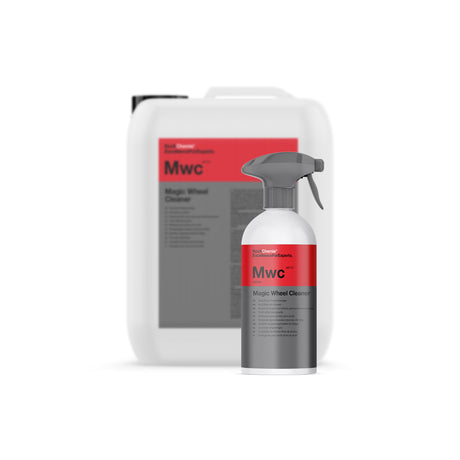
Magic Wheel Cleaner "Mwc" Limpiador de llantas
Limpiallantas sin ácido con viraje de color para uso diario en taller
Disponibles (26× 500 ml · 1× 10 liters)Desde 14,96€16,63€Contenido: 500mlPrecio unitario (29,92€ / l)Agotado








Productos de esta categoría
Ver todos-
Acid-free
Koch-Chemie
Magic Wheel Cleaner "Mwc" Limpiador de llantas
Limpiallantas sin ácido con viraje de color para uso diario en taller
Disponibles (26× 500 ml · 1× 10 liters)Desde 14,96€16,63€Contenido: 500mlPrecio unitario (29,92€ / l)Agotado -
SONAX
FelgenBeast limpiador de llantas
Limpiallantas sin ácido con viraje de color para todo tipo de llantas
Disponibles (9× 1000 ml / 1 liter)Desde 14,41€18,85€Contenido: 1000mlPrecio unitario (14,41€ / l)Agotado -
Koch-Chemie
Felgenreiniger extrem "Fe" limpiador de llantas
Limpiallantas pro con ácido clorhídrico para polvo de freno incrustado
Muy poca disponibilidad (1× 11kg)Reserva (22kg)Desde 97,61€Contenido: 11kgPrecio unitario (8,87€ / kg)Agotado -
TUGA Chemie
Alu-Teufel "Spezial"® (Verde) Limpiador de llantas
Gel limpiallantas pH-neutral con indicador de acción para toda llanta
Disponibles (7× 1000 ml / 1 liter · 7× 5 liters)Reserva (20 liters)Desde 18,74€Contenido: 1000mlPrecio unitario (18,74€ / l)Agotado -


 Private Customer Product Range
Koch-Chemie
"ReactiveWheelCleaner" Limpiallantas
Revoluciona el cuidado de llantas con este limpiador de alta gama
Desde 22,16€22,18€Contenido: 750mlPrecio unitario (29,55€ / l)Agotado -
Koch-Chemie
Alkali Wheel Cleaner "Awh" limpiador de llantas (alcalino)
Concentrado limpiallantas muy alcalino para el uso profesional diario
Muy poca disponibilidad (1× 5 liters)Reserva (20 liters)Desde 86,51€Contenido: 5lPrecio unitario (17,30€ / l)Agotado -
TUGA Chemie
Aluminium-Teufel® (Rojo) Limpiador de Llantas
Limpiallantas ácido para polvo de freno muy incrustado
Poca disponibilidad (3× 1000 ml / 1 liter · 2× 5 liters)Reserva (20 liters)Desde 16,52€Contenido: 1000mlPrecio unitario (16,52€ / l)Agotado -
Koch-Chemie
Felgenblitz säurefrei "Fb" limpiador de llantas
Limpiallantas sin ácido eficaz con viraje de color
Muy poca disponibilidad (2× 11kg)Reserva (19 kg)Desde 113,14€Contenido: 11kgPrecio unitario (10,29€ / kg)Agotado -

 EXTREME
SONAX
XTREME Limpiador de Llantas PLUS
FelgenReiniger PLUS: indicador de acción, toda llanta, apto TPMS
Desde 14,41€21,06€Contenido: 500mlPrecio unitario (28,82€ / l)Agotado -
Koch-Chemie
Triple Acid Star "Ta" limpiador de llantas
Muy poca disponibilidad (1× 11kg)Reserva (23 kg)Desde 103,15€Contenido: 11kgPrecio unitario (9,38€ / kg)Agotado -
D-CON
"V4" Wheelcleaner & De-Ironizer Limpiador de llantas
Limpiallantas muy eficaz con aroma a lavanda para toda superficie
Desde 9,95€16,58€Contenido: 500mlPrecio unitario (19,90€ / l)Agotado -


GYEON
Q²M Iron WheelCleaner (REDEFINED) Limpiallantas
Limpiallantas reactivo: disuelve químicamente polvo de freno y óxido
Poca disponibilidad (1× 1000 ml / 1 liter · 3× 500ml)Desde 15,53€Contenido: 500mlPrecio unitario (31,06€ / l)Agotado -


 P21S
P21SDr. Wack "P21S"
Limpiador de llantas P21S "HIGH END"
Máxima potencia de limpieza para todas las llantas
Disponibles (6× 1000 ml (Limited Edition 2025) · 6× 750ml)Reserva (100ml · 2 liters / 2000 ml · 5 liters)Desde 8,87€Contenido: 100mlPrecio unitario (88,70€ / l)Agotado -
Koch-Chemie × THE FINISHER
Limpiador de llantas THE FINISHER "WheelKing"
Limpiallantas potente sin ácido con efecto brillo y beading
Poca disponibilidad (4 unidades)17,74€18,85€Contenido: 500mlPrecio unitario (35,48€ / l)Agotado -

 ULTIMATE
Meguiars
Ultimate All Wheel Cleaner limpiallantas
Quita polvo de freno y suciedad de carretera sin frotar
Disponibles (21 unidades)17,74€24,29€Contenido: 709mlPrecio unitario (25,02€ / l)Agotado -


Soft99
Limpiador de llantas Soft99 Iron Terminator
Limpiallantas innovador para una limpieza a fondo
12,19€Contenido: 500mlPrecio unitario (24,38€ / l)Agotado -
Dr. Wack "P21S"
P21S "POWER GEL" Limpiador de llantas
Gel limpiallantas sin ácido, con indicador de acción y agarre
Poca disponibilidad (4× 1000 ml / 1 liter)Reserva (750ml · 2 liters / 2000 ml · 5 liters · 25 liters)Desde 6,54€6,65€Contenido: 100mlPrecio unitario (65,40€ / l)Agotado -


 PROFILINE
SONAX
PROFILINE FelgenReiniger Red Max limpiador de llantas
FelgenReiniger Red Max: limpiallantas ácido profesional
Desde 64,33€92,40€Contenido: 5000mlPrecio unitario (12,87€ / l)Agotado -
NIGRIN
Limpiador de llantas "Alu Monster"
Gel limpiallantas sin ácido con cambio de color, todo tipo de llantas
Disponibles (7× 1000 ml / 1 liter)Reserva (5 liters · 25 liters)Desde 16,58€Contenido: 1000mlPrecio unitario (16,58€ / l)Agotado -
NAP Care
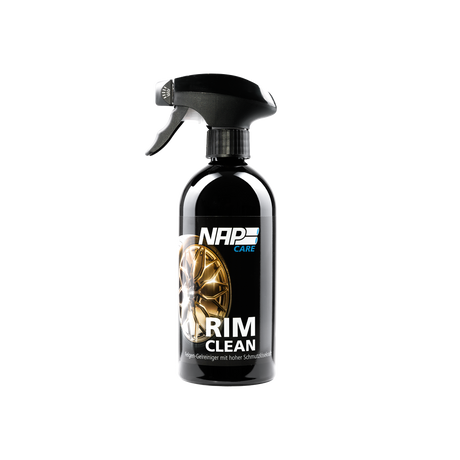
NAP Care "RIM-CLEAN" Limpiador Gel de Llantas y Eliminador de Polvo Férrico
Limpiallantas eficaz para llantas limpias y brillantes
Poca disponibilidad (4 unidades)Desde 8,87€22,07€Contenido: 500mlPrecio unitario (17,74€ / l)Agotado -
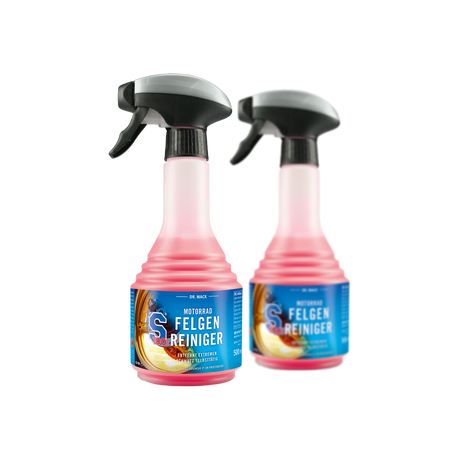
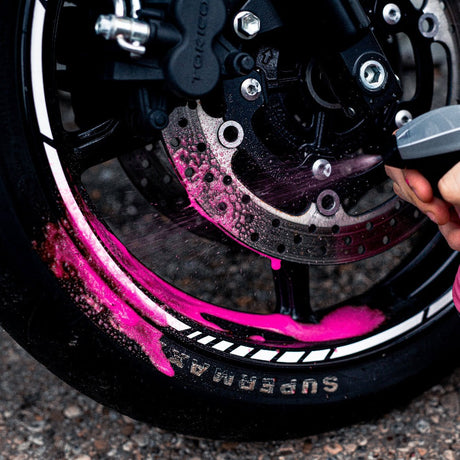 S100
S100Dr. Wack "S100"
Limpiador de Llantas de Moto "S100" para Moto
Limpiallantas eficaz para llantas de moto relucientes
Muy poca disponibilidad (2 unidades)Desde 17,74€Contenido: 500mlPrecio unitario (35,48€ / l)Agotado -
Soft99
Digloss Kamitore Wheel and Tire Cleaner Limpiador de Llantas
Limpiallantas que limpia en profundidad y protege
Disponibles (11 unidades)19,40€27,72€Contenido: 800mlPrecio unitario (24,25€ / l)Agotado -
 ULTIMATE
Meguiars
Ultimate Waterless "Wheel and Tire" Detailer de lavado en seco
Limpia llantas y cuida neumáticos sin agua en un solo producto
21,06€27,62€Contenido: 709mlPrecio unitario (29,70€ / l)Agotado -
TUGA Chemie
Biker's Felgen-Teufel® limpiador de llantas para "moto"
Limpiallantas de moto sin ácidos con indicador de reacción quelante
Disponibles (10× 1000 ml / 1 liter)Desde 22,07€Contenido: 1000mlPrecio unitario (22,07€ / l)Agotado






Detailing101
Ver todos-

Limpiar el volante de Alcantara: otra vez con agarre y sin brillo graso
Daniel von Detailing1 |
-

Cuidar el cuero de BMW empieza por saber si es Dakota, Vernasca o Merino
Daniel von Detailing1 |
-

5 errores al iluminar que esconden hologramas en la pintura
Daniel von Detailing1 |
-

-

Sellador de pintura o cera: 5 casos que deciden antes del invierno
Daniel von Detailing1 |
-

Lavar y cuidar bien la pintura mate y el vinilo mate
Daniel von Detailing1 |
-

Quitar resina seca de la pintura del coche: primero disolver, luego sellar
Daniel von Detailing1 |
-

Manchas de agua secas en el coche: ¿ácido o pulido?
Daniel von Detailing1 |
-

Quitar pegatinas del coche: el gesto que evita los restos de pegamento
Daniel von Detailing1 |
-

Clay bar en el coche: cuándo la necesita la pintura antes del invierno
Daniel von Detailing1 |
-

Secar el coche: 5 mitos que dejan manchas de agua en la pintura
Daniel von Detailing1 |
-

Cómo guardar los neumáticos: por qué la llanta tiene que estar limpia antes
Daniel von Detailing1 |


