









How to Dry Your Car: 5 Myths That Leave Water Spots on Your Paint
Daniel von Detailing1 |


Koch-Chemie Felgenreiniger extrem "Fe" wheel cleaner - 11kg is on backorder. As soon as everything in your order is back in stock, we ship it all in one go — delivery time follows whichever item takes longest.
Item added to your cart.
View cart

| Koch-ChemieFelgenreiniger extrem "Fe" wheel cleaner 11kg Pre-order
|
97,61€
Contents: 11kgUnit price (8,87€
/ kg)
Unavailable
|
||
| Koch-ChemieFelgenreiniger extrem "Fe" wheel cleaner 22kg Pre-order
|
178,02€
Contents: 22kgUnit price (8,09€
/ kg)
Unavailable
|
||
| Koch-ChemieFelgenreiniger extrem "Fe" wheel cleaner 225kg Pre-order
|
1.932,29€
Contents: 225kgUnit price (8,59€
/ kg)
Unavailable
|
Ausverkauft |
Do you have any questions or need help?
We are sure that our help page will help you. There you will find information on how to contact us and the relevant answers to frequently asked questions.
Didn't find what you were looking for? Write us a message in the chat.
Fast international shipping to your country with FedEx, DPD or your national postal service, delivery time 1-4 days. Prices include the VAT of your country.
All shipping methods, rates and weight tiers are listed in our shipping policy.
Car Care Store in Nordhorn
Why wait when you can get it fast? Order your car care products from us online and choose between convenient pickup or our lightning-fast delivery, whether locally or throughout Europe. We are dedicated to offering you maximum flexibility and convenience so your car always stays in top condition.
You can always pick up your order from Tuesday to Friday, 10:00 to 17:00, at Bosinks Kamp 8 in 48531 Nordhorn at Detailing1. Please have your pickup confirmation ready. We look forward to your visit.
Couldn't load pickup availability

What is Koch-Chemie Felgenreiniger extrem "Fe"? An HCl-based pro concentrate at pH -0.2 that dissolves baked-on brake dust, rust film and cement haze on steel wheels, painted alloy wheels and shop floors. Not for polished aluminium, magnesium, chrome or marble.
Koch-Chemie Felgenreiniger extrem "Fe" is an extremely acidic specialist cleaner from Koch-Chemie, built on hydrochloric acid (HCl), that chemically dissolves inorganic grime like baked-on brake dust, iron oxide and limescale haze. At a pH of -0.2 it sits among the strongest cleaners in the Koch-Chemie range and it's a pure shop and industrial product — no pack size under 11 kg, no spray bottle, no consumer format.

Detailing1's tip from the shop: Always pre-wet the surface. Laid down dry, the acid reacts too fast and bites into the surface harder than it needs to. A water pre-wet slows the reaction and spreads the concentrate evenly. The second common mistake: leaving it on too long. At pH -0.2, 30 to 90 seconds is plenty — after that the product belongs blasted off with a pressure washer. Letting it dry on causes material damage, not "a little longer for more cleaning".
You don't run the Fe neat. Standard dilution is 1:5 with water, up to 1:2 for extreme grime, up to 1:10 for light grime. That turns 11 kg of concentrate into 33 to 110 kg of working solution — one litre of ready solution costs between 0.72 and 2.40 EUR depending on the dilution.
Before you lay it down, hose the wheel down thoroughly with water. This pre-wet isn't optional. It slows the acid reaction, spreads the concentrate better and cuts the risk of streaking and spot material damage. Apply it with a low-pressure sprayer or brush from the bottom up, so run-off marks don't dry on. On vertical surfaces like wash-bay tiles, work in 1-metre lanes so the concentrate doesn't run over areas you've already done.
The order matters around the tyre. First mask the tyre sidewall or apply the dilution precisely — hydrochloric acid can bleach tyre markings. Then work the wheel itself, always from the same rotation position so no area gets missed. After rinsing, check it visually and only go for a second pass if there's grime still showing — with a properly dosed first pass that's rarely needed.
Dwell time is 30 to 90 seconds. As soon as you see a reaction (foaming, discolouration), work it straight away with the wheel brush and rinse off thoroughly with a pressure washer. Several short passes beat one long one — the acid is saturated after 2 minutes max and does nothing but damage after that. PPE is a must: acid-resistant gloves, safety goggles, long-sleeved work gear. Rinse any splashes off your skin immediately with plenty of water.

The Fe is built for acid-resistant materials. Steel wheels, painted alloy wheels with intact clear coat, wash-bay tiles and commercial vehicles all qualify. Its cleaning power on baked-on brake dust from trucks, buses and construction machines is unmatched across the trade — no acid-free alternative comes close to that depth.
The chemistry is clear: hydrochloric acid dissolves iron oxide (Fe₂O₃) out of the brake dust and converts it into water-soluble iron chloride, which flows away with the rinse water. The same principle works on limescale (calcium carbonate), cement haze after building work and scale in wash bays. Inorganic grime dissolves in seconds; organic grime like tar, oil or insect residue isn't touched — that needs a solvent or surfactant cleaner.
The speed advantage is genuinely measurable. Acid-free wheel cleaners working via thioglycolate need 3 to 5 minutes of dwell time per pass and often two or three passes on baked-on brake dust. The Fe dissolves the same grime in 30 to 90 seconds in a single pass. In a detailing business with ten vehicles a day, that's a time saving of 60 to 90 minutes — costed as an hourly rate, the investment in the big pack pays for itself within a few weeks.
Where the Fe destroys on contact: polished aluminium with no paint protection, magnesium, chrome (attacked too, even lightly), zinc, marble, natural stone and all anodised surfaces. A pH of -0.2 is practically concentrated hydrochloric acid — this is industrial chemistry, not detailing care. Before the first use on any unknown surface, test a hidden spot, at least 5 cm² for 30 seconds, then rinse off thoroughly and check it visually.
If the wheels are polished, chromed or uncoated, grab the acid-free Koch-Chemie Felgenblitz "Fb" — it works through iron-binding agents instead of acid and is safe on all common wheel types. If the wheels are painted, carry little brake dust and you clean them regularly, an acid-free cleaner is enough too. The Fe only justifies itself when the brake dust is baked on and acid-free cleaners hit their limit.

The Fe is not a consumer product. It belongs in the shop, in the detailing bay and in the wash tunnel. Use it privately in your home garage and you're buying 11 kg of concentrate for a job an acid-free cleaner solves just as well in a 1-litre format — at far less risk to the wheel and to your own health.
The typical use cases are easy to name. Detailers with several vehicles a day need the fast, deep action on first-time clean-ups of neglected cars. Workshops with a tyre-change service use it during wheel swaps — above all in spring after the winter season, when road salt and baked-on brake dust sit together on the steel wheel.
Truck and bus wash bays run it as their main cleaner against brake dust and road grime. Construction firms clean their vehicles of cement and limescale residue after a job. Building cleaners work with it on shop tiles, in maintenance halls and on industrial floor surfaces when limescale deposits, rust marks or cement haze need to come off.
For the buying decision it comes down to the pack. The 11 kg canisters are the right format for workshops with occasional need and detailers doing one or two vehicles a day — at 1:5 dilution they last for around 250 wheel sets. The 22 kg canister pays off for detailing businesses and smaller wash bays.
The 225 kg drum with pump system is the standard size for truck wash bays, large operations and building cleaners with daily use. The price per kg drops by about 12 percent from the 11 kg pack to the 225 kg drum — the bigger investment pays off from steady daily demand. If you're unsure which pack fits, start with the 11 kg canister and step up once you're going through three canisters a quarter.
As a complete setup you pair the Fe for the first clean with the acid-free Felgenblitz "Fb" for regular follow-up cleaning — that way you limit acid use to what genuinely can't be shifted acid-free. For tyre care afterwards, reach for a regular tyre dressing. Store in the original canister, frost-free, away from food, kept separate from alkaline cleaners (reaction risk).
Within the Koch-Chemie wheel cleaner family, the Fe sits at the top of the acidic line. If you need even more cleaning power and want to work with a three-acid blend, go for the Triple Acid Star "Ta". If you want to work acid-free and you've got baked-on brake dust, you accept several passes with the Felgenblitz or Reactive Wheel Cleaner. You take the Fe when it has to be cleaned fast, thoroughly and only once — in exactly the industrial field the HCl-based pro formula from Koch-Chemie was originally built for.

Not sure about Koch-Chemie Felgenreiniger extrem "Fe" wheel cleaner? Get it explained:
"Fe" is a hydrochloric acid-based professional concentrate with a pH of -0.2 from the Koch-Chemie industrial range. It removes ingrained brake dust, rust film, limescale, cement film, and inorganic contaminants from acid-resistant materials. Available in 11, 22, and 225 kg containers — not a consumer format. Main target groups: workshops, detailers, car washes, and industrial companies.
Pre-wet the rim or surface with water first – this is not optional. Dilute the concentrate 1:5 with water (1:2 for extreme contamination, 1:10 for light contamination), apply from bottom to top with a low-pressure sprayer. Allow to dwell for 30 to 90 seconds, work with a brush if necessary, then rinse thoroughly with a high-pressure cleaner. Do not let it dry.
"Fe" is acid-based (hydrochloric acid, pH -0.2), while Felgenblitz "Fb" is acid-free (iron binder with color change). "Fe" is stronger and faster on ingrained brake dust; "Fb" is material-friendly on all rim types. Always choose "Fb" for polished or chrome-plated rims; for "Fe", only use on steel or painted aluminum rims.
No. Suitable only for steel rims and painted aluminum rims with intact clear coat. NOT suitable for polished aluminum, magnesium, chrome, zinc, anodized rims, marble, and natural stone. Before first use on an unknown surface, test an inconspicuous area – 5 cm² for 30 seconds, then rinse and visually inspect.
With a pH of -0.2, a dwell time of 30 to 90 seconds is sufficient. Longer dwell time does not provide additional cleaning power – the acid is saturated after a maximum of 2 minutes. Instead, material damage is possible: dull spots on painted rims, corrosion on sensitive components, bleached tire sidewalls. Drying on causes irreversible damage to almost all materials.
At the standard dilution of 1:5, 11 kg of concentrate yields approximately 66 kg of application solution – enough for about 250 sets of rims (4 rims per vehicle, approx. 50 ml solution per rim). In daily detailing operations with two to three vehicles per day, an 11 kg canister lasts about two to three months. Store in the original canister, frost-free, separate from alkaline cleaners.
Before application, the surface to be cleaned is thoroughly pre-wetted with water. This pre-wetting is not optional — it slows down the reaction of the hydrochloric acid and distributes the concentrate evenly. If applied dry, the cleaner reacts too quickly and attacks the surface more aggressively than necessary.
The concentrate is diluted with water at a ratio of 1:5 — up to 1:2 for extreme soiling, and up to 1:10 for light soiling. Apply with a low-pressure sprayer or brush from bottom to top to prevent drip marks from drying. For car wash tiles and vertical surfaces, work in 1-meter sections.
The exposure time is 30 to 90 seconds. In case of a visible reaction (foaming, discoloration), immediately rework with the wheel brush. Then rinse thoroughly with a high-pressure cleaner — the acid must be completely removed. Several short applications are better than one long application with a longer exposure time.
Personal protective equipment is mandatory: acid-resistant gloves, safety glasses, long-sleeved work clothing. Immediately rinse splashes on the skin with plenty of water. In case of eye contact, flush eyes under running water for at least 15 minutes and consult a doctor.
Notes: Never apply to hot surfaces — the reaction will then proceed uncontrollably. Not for polished aluminum, magnesium, chrome, zinc, anodized surfaces, marble, and natural stone. Before each first use on an unknown surface, test an inconspicuous spot (5 cm², 30 seconds). Do not mix with alkaline cleaners — the reaction generates heat and can cause splashes. Store in the original canister at 5 to 30 °C, frost-free, separated from food and alkaline products. Pure professional product — keep out of reach of children or untrained personnel.
Safety information for Koch-Chemie Felgenreiniger extrem "Fe" wheel cleaner
For business customers only
This product, marked “For business customers only”, is not packaged, declared, registered and certified for private customers under German law. It may only be purchased by business buyers and is approved for professional users only. Please enter your VAT identification number in the cart. On request, we will tell you whether, and in which pack sizes, the product is approved for private customers.
Material composition
Hydrochloric acid (CAS 7647-01-0, EC 231-595-7) — 10 – < 25 %, 2-Propylheptanol, ethoxylated (CAS 160875-66-1) — 1 – < 10 %, Benzaldehyde (CAS 100-52-7, EC 202-860-4) — 0.1 – < 1 %, and Detergents Regulation (EC) No 648/2004: 5 % or over but less than 15 % non-ionic surfactants, BENZALDEHYDE
Danger

Corrosive

Harmful
| May cause respiratory irritation. | H335 |
| May be corrosive to metals. | H290 |
| Causes severe skin burns and eye damage. | H314 |
| Do not breathe dust/fume/gas/mist/vapours/spray. | P260 |
| Wear protective gloves/protective clothing/eye protection/face protection. | P280 |
| IF SWALLOWED: Rinse mouth. Do NOT induce vomiting. | P301+P330+P331 |
| IF ON SKIN (or hair): Take off immediately all contaminated clothing. Rinse skin with water [or shower]. | P303+P361+P353 |
| IF IN EYES: Rinse cautiously with water for several minutes. Remove contact lenses, if present and easy to do. Continue rinsing. | P305+P351+P338 |
| Immediately call a POISON CENTER/doctor. | P310 |
| Absorb spillage to prevent material damage. | P390 |
VOC content
0.25 % — proportion of volatile organic compounds.
Downloads
Download safety data sheet
This product information is intended only as non-binding advice. No liability on our part can be derived from it. Please check whether the product is suitable for your application. Test for suitability and compatibility before use. We are happy to advise you.
Questions about this information?
Contact
Koch‑Chemie GmbH
Einsteinstr. 42, 59423 Unna, Deutschland
+492303986700
info@koch-chemie.com
koch-chemie.com
Choose from many payment methods such as PayPal, Klarna, Apple Pay, Mastercard or Visa and benefit from pay later and instalment options. Your payment details are always processed securely. Questions about payment?
Your order reaches you in 1-4 days with FedEx, DPD or your national postal service. Prices include the VAT of your country. Questions about shipping?


Koch-Chemie
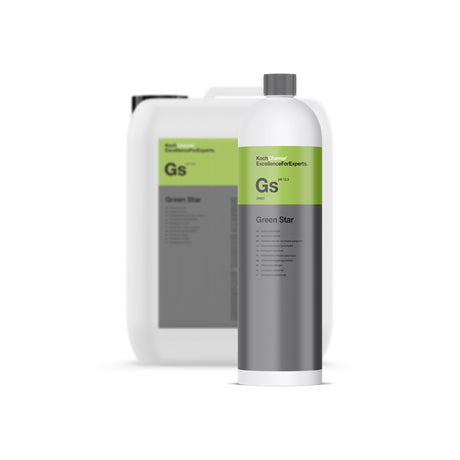
Green Star "Gs" Universal Cleaner
Highly alkaline APC concentrate for workshops, engine bays and lifts


Koch-Chemie
Spray Head "Star" (28/400) CHS-3AN by Canyon
Chemical spray head for 28/400 bottles with stepless nozzle
Koch-Chemie
Top Star "Ts" Interior Plastic Care
Silicone-free Plastic Care with UV Protection and Silk-Matte Finish
Koch-Chemie
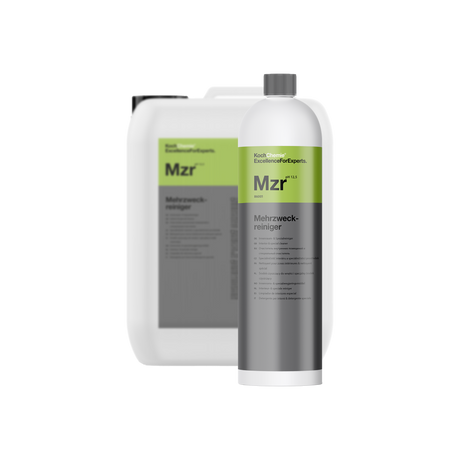
Multi-Purpose Cleaner "Mzr" All-Purpose Cleaner
Alkaline cleaner concentrate with pH 12.5 and Daimler approval
Koch-Chemie
Vorreiniger B "Vb" Pre-Cleaner
Alkaline pre-cleaner for car and truck pre-washing, VDA-compliant
Koch-Chemie
Glas Star "Gla" Glass Cleaner Concentrate
Concentrated alcohol-based glass cleaner with Daimler approval
Koch-Chemie
Cleans thoroughly and gently, preserves the shine of the paint surface
Koch-Chemie
Reactive Rust Remover "Rrr" iron fallout remover
Maximum cleaning performance for flawless results without compromise
Koch-Chemie
Teerwäsche A "Tea" Bitumen & Tar Remover
Perfect bitumen and tar removers for a flawless finish
Koch-Chemie
Leather Star "Ls" Leather Care
Ready-to-use leather care emulsion with active UV blockers
Koch-Chemie
Gummifix "Guf" rubber and plastic care
Silicone-free rubber and plastic care for non-slip floor mats


Koch-Chemie
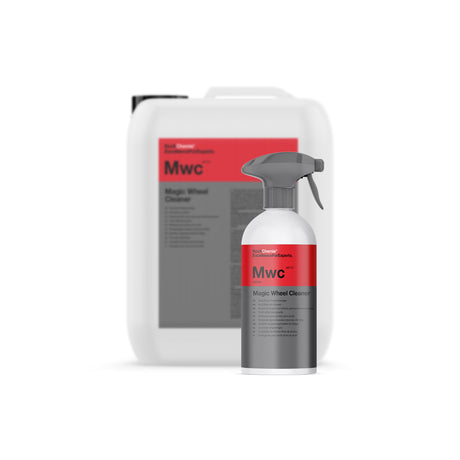
Magic Wheel Cleaner "Mwc" Wheel Cleaner
Acid-free wheel cleaner with color change for daily workshop use
Daniel von Detailing1 |

Daniel von Detailing1 |

Jasper von Detailing1 |

Daniel von Detailing1 |

Daniel von Detailing1 |

Jasper von Detailing1 |

Daniel von Detailing1 |

Daniel von Detailing1 |

Daniel von Detailing1 |

Daniel von Detailing1 |

Daniel von Detailing1 |

Daniel von Detailing1 |