

Ładowanie...
Acid-free
14,96€
16,63€
Zawartość: 500mlCena jednostkowa (29,92€
/ l)
Niedostępne
w tym 2,49€ VAT (20%), plus koszt wysyłki, obliczany przy kasie
Koch-Chemie Magic Wheel Cleaner "Mwc" Środek do felg - 500 ml nie jest dostępny od ręki. Gdy wszystkie produkty z Twojego zamówienia będą znów dostępne, wyślemy je w jednej przesyłce. Czas dostawy zależy od produktu z najdłuższym czasem dostawy.
34 szt. dostępnych
— Gotowe do natychmiastowej wysyłki, czas dostawy 1-4 dni
Dodano
Pokaż koszyk
Metody wysyłki i płatności
Schnellbestellung
| Koch-ChemieMagic Wheel Cleaner "Mwc" Środek do felg 500 ml Dostępny (34 szt.)
|
14,96€
Zawartość: 500mlCena jednostkowa (29,92€
/ l)
Niedostępne
|
||
| Koch-ChemieMagic Wheel Cleaner "Mwc" Środek do felg 2x 500ml Dostępny (17 szt.)
|
32,59€
Zawartość: 1000mlCena jednostkowa (32,59€
/ l)
Niedostępne
|
||
| Koch-ChemieMagic Wheel Cleaner "Mwc" Środek do felg 3 x 500ml Dostępny (11 szt.)
|
48,38€
Zawartość: 1500mlCena jednostkowa (32,25€
/ l)
Niedostępne
|
||
| Koch-ChemieMagic Wheel Cleaner "Mwc" Środek do felg 10 liters Dostępny (1 szt.)
|
136,98€
Zawartość: 10lCena jednostkowa (13,70€
/ l)
Niedostępne
|
Bezkwasowy środek do felg ze zmianą koloru na co dzień w warsztacie
Bezkwasowy środek do felg ze zmianą koloru na co dzień w warsztacie
Pytania i pomoc
Pytania i pomoc
Masz pytania albo potrzebujesz pomocy?
Jesteśmy pewni, że nasza strona pomocy Ci pomoże. Znajdziesz tam dane kontaktowe i odpowiedzi na najczęściej zadawane pytania.
Nie znalazłeś odpowiedzi? Napisz do nas na czacie.
Wysyłka i dostawa
Wysyłka i dostawa
Szybka wysyłka międzynarodowa do Twojego kraju przez FedEx, DPD lub Twoją pocztę krajową, czas dostawy 1-4 dni. Ceny zawierają VAT obowiązujący w Twoim kraju.
Wszystkie metody wysyłki, ceny i progi wagowe znajdziesz w naszej polityce wysyłki.
Odbiór w sklepie
Odbiór w sklepie
Sklep z kosmetykami samochodowymi w Nordhorn
Po co czekać, skoro może być szybko? Zamów kosmetyki samochodowe online i wybierz wygodny odbiór osobisty albo naszą błyskawiczną dostawę, lokalnie lub w całej Europie. Stawiamy na maksymalną elastyczność i wygodę, żeby Twoje auto zawsze było w topowej formie.
Swoje zamówienie możesz odebrać od wtorku do piątku w godz. 10:00–17:00 w Detailing1, Bosinks Kamp 8, 48531 Nordhorn. Miej przy sobie potwierdzenie odbioru. Do zobaczenia!
Nie udało się załadować dostępności odbioru

14,96€
16,63€
Zawartość: 500mlCena jednostkowa (29,92€
/ l)
Niedostępne
Rozpuszczanie pyłu hamulcowego chemicznie na polerowanych felgach
Czym jest Koch-Chemie Magic Wheel Cleaner? Bezkwasowy, gęsty środek do felg z linii warsztatowej Koch-Chemie, który widocznie rozpuszcza chemicznie pył hamulcowy i nalot rdzy poprzez zmianę barwy na czerwono-fioletową. Nadaje się do aluminium lakierowanego, aluminium polerowanego, chromu i stali. Nie nadaje się do zapieczonej smoły ani plam bitumicznych.
Koch-Chemie Magic Wheel Cleaner — wewnętrznie zwykle nazywany "MWC" — to bezkwasowy środek do felg z linii warsztatowej Koch-Chemie. Substancja czynna, merkaptooctan amonu, sól kwasu tioglikolowego, reaguje ze związkami żelaza(III) w pyle hamulcowym i odrywa je od powierzchni felgi jako czerwono-fioletowy kompleks. Zmiana barwy to nie marketingowy chwyt, tylko sama reakcja chemiczna: tam, gdzie widzisz fiolet, żelazo właśnie się przereagowuje. Przy pH 5–6 formuła pozostaje łagodna dla lakierowanych i polerowanych felg aluminiowych, chromu i stali. Wysoka lepkość 50 mPa·s sprawia, że produkt trzyma się pionowych powierzchni felgi, zamiast od razu spływać — dzięki temu masz pełny czas działania na materiale.
- Czerwono-fioletowa zmiana barwy jako wskaźnik reakcji. Żadnego zgadywania, jak długo czekać. Widzisz na bieżąco, gdzie cząstki żelaza reagują i kiedy reakcja się kończy. To eliminuje dwa klasyczne błędy: zbyt wczesne spłukanie (czyszczenie niedokończone) i zbyt długie działanie (produkt się nasyca i zasycha).
- Syropowata lepkość dla pionowej przyczepności. Przy 50 mPa·s Magic Wheel Cleaner jest na tyle gęsty, że zostaje w szprychach i na rancie felgi, nie kapiąc od razu na ziemię. To odróżnia go od wodnistych środków do felg, gdzie połowa produktu spłynęłaby bez pożytku.
- Jeden środek na cały twój zestaw felg. Aluminium lakierowane, aluminium polerowane, chrom i stal — pH 5–6 jest na tyle łagodne, by używać go nawet na lśniąco polerowanych felgach kutych. Na felgach anodowanych lub z matową powłoką najpierw sprawdzasz w ukrytym miejscu.
Co widzimy na co dzień: Zawsze psikaj na zimną, suchą felgę — nigdy w pełnym słońcu, nigdy na ciepłe hamulce po jeździe. Ciepłe powierzchnie powodują zasychanie żelu, a to zostawia osad, który potem musisz usuwać szczotką. Przy mocno zabrudzonych felgach po miesiącach bez czyszczenia dwa krótkie przejścia działają lepiej niż jedno długie: substancja czynna jest chemicznie nasycona po około 5 minutach. Po prostu dajesz dwa razy po 3 minuty działania i spłukujesz pomiędzy.
Zimna felga. Psikasz. Czekasz 2 do 5 minut.
Psiknij Magic Wheel Cleaner na zimną, suchą felgę — równomiernie obejmij szprychy, rant wewnętrzny, krawędź i śruby koła. Dzięki syropowatej konsystencji produkt trzyma się pionowo i nie musisz zmieniać sposobu pracy. Najlepiej idziesz od dołu do góry, żeby nie zakrywać już zwilżonych powierzchni.
Po 30 do 60 sekundach rusza zmiana barwy: najpierw w miejscach z dużą ilością pyłu hamulcowego, potem na całej powierzchni. Czerwono-fioletowe smugi pokazują dokładnie, gdzie cząstki żelaza są właśnie przereagowywane. Po 2 do 5 minutach działania reakcja jest zakończona — dłuższe czekanie nic nie daje, bo substancja czynna nasyca się po około 5 minutach. Częsty błąd to zostawienie produktu na 10 minut w nadziei na lepszy efekt. Dzieje się odwrotnie: roztwór zaczyna zasychać i zostawia smugi.
Na koniec spłukujesz mocnym strumieniem wody z myjki ciśnieniowej lub węża ogrodowego, z góry na dół. Przy dużym pyle hamulcowym między wąskimi szprychami szczotka do felg może pomóc rozprowadzić rozpuszczony materiał — nie do szorowania, tylko do poprawek. Kto czyści co tydzień lub co dwa, zwykle radzi sobie jednym przejściem.
Słowo o dozowaniu: 500 ml starcza na około 10 pełnych myć pojazdu. Na koło wystarczy 40 do 50 ml. To wychodzi 1,25 euro za pełne zastosowanie — znacznie taniej, niż sugeruje cena butelki, kiedy przeliczysz to na czas spędzony na mechanicznym szorowaniu mniej skutecznymi środkami.
Cząstki żelaza rozpuszcza. Smoły nie.
Magic Wheel Cleaner jest zbudowany precyzyjnie do jednego zadania: chemicznego rozpuszczania pyłu hamulcowego i nalotu rdzy. Reakcja między merkaptooctanem amonu a jonami żelaza(III) w pyle hamulcowym to mechanizm działania — wszystko, co nie jest żelazem, nie zostaje naruszone. To tłumaczy zmianę barwy jako narzędzie diagnostyczne: brak zabarwienia oznacza brak żelaza, a brak efektu w tym przypadku to nie wada produktu, tylko właściwa odpowiedź na brud.
Jako drugie zastosowanie Magic Wheel Cleaner działa też na lakierze jako odżelaziacz — szczególnie ciekawe przy autach parkowanych pod opadami przemysłowymi lub obok torów kolejowych. Drobne cząstki żelaza osadzają się tam na lakierze bezbarwnym i reagują z formułą MWC tak samo jak na feldze. Użyty przed polerką, zwiększa przyczepność kolejnego waxu lub powłoki ceramicznej, bo powierzchnia lakieru jest naprawdę wolna od zanieczyszczeń.
Tam, gdzie MWC to nie ten produkt: zapieczona smoła, plamy bitumiczne i zabrudzenia olejowe nie reagują z solami tioglikolanu. Do tego potrzebujesz zmywacza smoły na bazie rozpuszczalnika. Przy skrajnie zaniedbanych felgach z kilkumiesięcznym pyłem hamulcowym wżartym w pory lepszym wyborem może być mocniejszy Koch-Chemie Reactive Wheel Cleaner — jego system kwasowy jest mocniejszy, choć nie nadaje się do wszystkich materiałów felg. Wybór jest jasny: kiedy liczy się bezpieczeństwo na chromie i polerowanych felgach — MWC. Kiedy potrzebujesz maksymalnej siły czyszczenia i pracujesz z aluminium lakierowanym i stalą — RWC.
Drugi przypadek, w którym żaden środek do felg już nie pomoże: gdy felga jest już widocznie skorodowana albo lakier bezbarwny się złuszczył. W tym momencie nie chodzi już o czyszczenie, tylko o renowację lakieru. Magic Wheel Cleaner to produkt pielęgnacyjny — nie środek do renowacji.
Twój standard do regularnej rutyny przy kołach
Magic Wheel Cleaner to właściwy wybór dla każdego, kto pielęgnuje felgi w stałym rytmie i szuka produktu, przy którym nie musi myśleć o zgodności materiałów. Jeden produkt, jeden krok, wszystkie koła gotowe. To logika warsztatowa — i dokładnie do tego MWC jest stworzony.
Najmocniej pokazuje swoje atuty, kiedy pielęgnujesz kilka aut z różnymi typami felg albo pracujesz na flocie. Zamiast trzech środków na trzy typy felg wystarczy jeden. Słabszy jest przy skrajnie zapieczonych osadach pyłu hamulcowego z wysokowydajnych układów hamulcowych albo na felgach nieczyszczonych miesiącami. W obu przypadkach drugie przejście lub agresywniejszy produkt ma więcej sensu niż wydłużanie czasu działania.
Jako kompletne rozwiązanie Magic Wheel Cleaner działa najlepiej w połączeniu z środkiem do mycia wstępnego takim jak Koch-Chemie Vorreiniger B, nanoszonym w piance na całą felgę, zanim MWC wejdzie w szprychy. Na koniec pielęgnacja opon na boku — i cała rutyna przy kołach mieści się w jakichś 15 minutach na auto, jeśli trzymasz się tego co dwa tygodnie. To najczęściej kupowany combo u naszych klientów: Vorreiniger B + Magic Wheel Cleaner. Precyzyjny, powtarzalny przebieg, który działa bez szorowania.
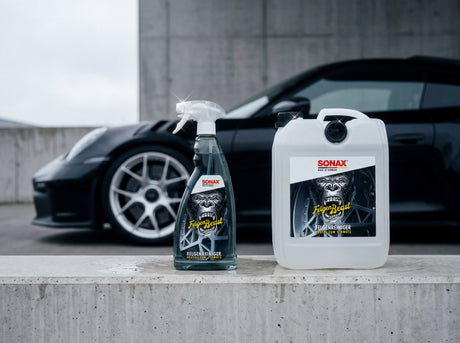
W bezpośrednim porównaniu z bezkwasowym klasykiem SONAX FelgenBeast Magic Wheel Cleaner wygrywa w dwóch punktach: wyższa lepkość daje dłuższy czas kontaktu na feldze, a formuła warsztatowa jest mocniej dozowana pod użytek profesjonalny. Za to FelgenBeast ma łagodniejszy zapach — jeśli pracujesz w zamkniętym garażu, na pewno to wyczujesz. Magic Wheel Cleaner to standard warsztatowy. FelgenBeast to garażowy wszechstronniak. Oba robią swoje niezawodnie; pytanie brzmi, który pasuje do twojego środowiska pracy.
Masz wątpliwości co do Koch-Chemie Magic Wheel Cleaner "Mwc" Środek do felg? Poproś o wyjaśnienie:
Dodaj Detailing1 jako preferowane źródło w GoogleFrequently Asked Questions about Koch-Chemie Magic Wheel Cleaner
What exactly is the Koch-Chemie Magic Wheel Cleaner?
The Magic Wheel Cleaner, internally called "MWC", is an acid-free wheel cleaner from Koch-Chemie's workshop line. The active ingredient, ammonium mercaptoacetate, reacts with iron(III) compounds in brake dust and removes them from the wheel surface as a red-violet complex. The color change is not a dye but a direct chemical reaction. It is material-compatible with polished aluminum, painted aluminum, chrome, and steel at a pH value of 5 to 6.
How do I use Magic Wheel Cleaner correctly?
Spray evenly onto cold, dry rims from a distance of about 20 cm – include spokes, wheel well, rim flange, and wheel bolts. Allow to act for 2 to 5 minutes. After about 30 seconds, the red-violet color change begins. Then rinse off with a strong jet of water from top to bottom. For narrow spokes, use a wheel brush only for spreading, not for scrubbing.
What is the difference to Reactive Wheel Cleaner?
Magic Wheel Cleaner is acid-free and suitable for all common rim materials, including polished aluminum and chrome. The Koch-Chemie Reactive Wheel Cleaner contains acid and is more powerful for burnt-in brake dust, but not recommended for polished aluminum or chrome. The decision criterion is the rim material: polished aluminum or existing chrome → MWC. Painted aluminum or steel with extreme contamination → RWC.
Is MWC suitable for polished aluminum and chrome wheels?
Yes, that is one of the product's strengths. The pH of 5 to 6 and the acid-free formula are material-compatible with chrome, polished aluminum, and painted aluminum. For anodized or matte coated rims, test in an inconspicuous area beforehand – some coatings can react sensitively there. On magnesium forged wheels of modern Porsche and AMG lines, MWC is the workshop standard.
What happens if the Magic Wheel Cleaner is left on for too long?
The active ingredient is chemically saturated after about 5 minutes – a longer exposure time does not lead to better cleaning. What happens instead: the gel starts to dry out and leaves streaks that you will have to remove mechanically. In the sun or on warm rims, drying accelerates significantly. Therefore: for heavily soiled rims, it is better to apply twice for 2 to 3 minutes than once for 10 minutes.
How economical is a 500 ml bottle?
A 500 ml bottle is sufficient for about 10 complete vehicle cleanings with a normal degree of contamination. 40 to 50 ml of product are needed per wheel, depending on spoke geometry and rim size. With a bi-weekly rhythm, one bottle lasts about 5 months. The cost per complete application is approximately 1.25 Euros. For continuous use in the workshop, MWC is also available as a 10-liter canister.
Po prostu zapytaj. Daniel Ci pomoże.
Application of Koch-Chemie Magic Wheel Cleaner
Cold rim, pre-cleaned, two short applications instead of one long one
The Magic Wheel Cleaner works best when the rim is cold and dry and coarse road grime has been removed beforehand. Park the vehicle in the shade and let warm brakes cool down for at least 15 minutes — a quick palm test is sufficient: if the rim feels hot, it's too warm. Rinse off loose dirt with a high-pressure cleaner or garden hose and let the rim dry again. Even more efficient is a foam pre-cleaner like Koch-Chemie Vorreiniger B, which removes coarse road film before the MWC gets into the spokes.
For each wheel, 40 to 50 ml of product is sufficient. Spray the Magic Wheel Cleaner evenly over the entire rim — including spokes, rim bed, horn rim, and wheel bolts. Work from bottom to top to avoid overlapping already wet areas. Due to its syrup-like viscosity of 50 mPa·s, the gel adheres to vertical rim surfaces instead of running off immediately — thus fully utilizing the dwell time.
After 30 to 60 seconds, the red-violet color change begins in areas with a lot of brake dust, then spreads across the surface. The total dwell time is 2 to 5 minutes, no longer. The active ingredient is chemically saturated after about 5 minutes — further waiting brings no improvement, only the risk of residues drying. For heavily soiled rims after a long break, two short applications of 2 to 3 minutes each work significantly better than a single long application.
Finally, rinse with a strong jet of water from top to bottom until the water runs clear. A wheel brush helps in tight spokes — but only to distribute the dissolved material, not to scrub. The chemical reaction has already done the main work. If any color change residues are still visible after rinsing, apply a second short pass. Finish with a tire dressing on the sidewall — then the complete wheel workflow is about 15 minutes per vehicle.
Notes: Never spray on warm or hot rims and never in direct sunlight — the gel dries and leaves streaks. The product only works on iron components: baked-on tar, bitumen stains, and oily dirt are not affected; a solvent-based tar remover is needed for these. On anodized or matte coated rims, test in an inconspicuous area first. Store cool, dry, and tightly closed between 5 and 25 °C, out of reach of children and away from food.
Informacje dotyczące bezpieczeństwa: Koch-Chemie Magic Wheel Cleaner "Mwc" Środek do felg
Dopuszczony dla klientów prywatnych
Ten produkt, oznaczony jako „Dopuszczony dla klientów prywatnych”, jest zgodnie z prawem niemieckim zapakowany, zadeklarowany, zgłoszony i certyfikowany do sprzedaży klientom prywatnym. Przestrzegaj zwrotów wskazujących rodzaj zagrożenia i środki ostrożności.
Skład materiału
Merkaptooctan amonu (CAS 5421-46-5, WE 226-540-9) — 10 – < 30 %, Sole wewnętrzne, wodorotlenki, 1-propanaminy, 3-amino-N-(karboksymetylo)-N,N-dimetylo-, pochodnych N-C8-18-acylowych (CAS 97862-59-4, WE 931-296-8) — 10 – < 25 %, D-glukopiranoza, oligomeryczne, alkiloglikozydy C10-16(parzyste) (CAS 110615-47-9, WE 600-975-8) — 1 – < 2,5 %, Masa poreakcyjna: mono-D-glukopiranozyd 2-etyloheksylu, di-D-glukopiranozyd 2-etyloheksylu (CAS 108081-06-7, WE 414-420-0) — 0,3 – < 2,5 %, Aldehyd alfa-heksylocynamylowy (CAS 101-86-0, WE 202-983-3) — 0,01 – < 1 % i Rozporządzenie (WE) nr 648/2004 w sprawie detergentów: 5 % lub więcej, ale mniej niż 15 % amfoterycznych środków powierzchniowo czynnych, mniej niż 5% fosfonianów, niejonowych środków powierzchniowo czynnych, kompozycje zapachowe, CITRONELLOL, HEXYL CINNAMAL, LIMONENE
Niebezpieczeństwo

Żrące

Szkodliwe
| Działa szkodliwie po połknięciu. | H302 |
| Powoduje poważne uszkodzenie oczu. | H318 |
| Może powodować reakcję alergiczną skóry. | H317 |
| Działa szkodliwie na organizmy wodne, powodując długotrwałe skutki. | H412 |
| W razie konieczności zasięgnięcia porady lekarza, należy pokazać pojemnik lub etykietę. | P101 |
| Chronić przed dziećmi. | P102 |
| Unikać wdychania pyłu/dymu/gazu/mgły/par/rozpylonej cieczy. | P261 |
| Unikać uwolnienia do środowiska. | P273 |
| Stosować rękawice ochronne/odzież ochronną/ochronę oczu/ochronę twarzy. | P280 |
| W PRZYPADKU DOSTANIA SIĘ DO OCZU: Ostrożnie płukać wodą przez kilka minut. Wyjąć soczewki kontaktowe, jeżeli są i można je łatwo usunąć. Nadal płukać. | P305+P351+P338 |
| Natychmiast skontaktować się z OŚRODKIEM ZATRUĆ/lekarzem. | P310 |
| Zawartość/pojemnik usuwać do zatwierdzonego zakładu utylizacji odpadów. | P501 |
Zawartość LZO (VOC)
1.225 % — udział lotnych związków organicznych.
Pliki do pobrania
Pobierz kartę charakterystyki
Te informacje o produkcie mają charakter wyłącznie niewiążącej porady. Nie wynika z nich żadna odpowiedzialność z naszej strony. Sprawdź, czy produkt nadaje się do Twojego zastosowania. Przed użyciem sprawdź przydatność i zgodność. Chętnie Ci doradzimy.
Pytania dotyczące tych informacji?
Więcej o Koch-Chemie
Więcej o Koch-Chemie
Kontakt
Koch‑Chemie GmbH
Einsteinstr. 42, 59423 Unna, Deutschland
+492303986700
info@koch-chemie.com
koch-chemie.com
Specyfikacja
Specyfikacja
Ausführung
-
Inhalt500ml
-
ArtikelnummerD1-KCX-425500
-
EAN4260188688087
-
Herstellernummer425500
-
Gewicht640 g
Eigenschaften
-
Einsatzbereich am FahrzeugRäder
Produkt
-
Hersteller
-
ProdukttypŚrodek do felg
-
Kategorie
Prawny obowiązek zapewnienia zgodności towaru z umową
Prawny obowiązek zapewnienia zgodności towaru z umową
Płatność i wysyłka
💳 Bezpieczna płatność
Wybierz spośród wielu metod płatności, takich jak PayPal, Klarna, Apple Pay, Mastercard lub Visa, i skorzystaj z płatności odroczonej lub ratalnej. Twoje dane płatnicze są zawsze przetwarzane bezpiecznie. Pytania o płatność?
📦 Szybka wysyłka
Twoje zamówienie dotrze do Ciebie w 1-4 dni przez FedEx, DPD lub Twoją pocztę krajową. Ceny zawierają VAT obowiązujący w Twoim kraju. Pytania o wysyłkę?
Pasuje do tego w poradniku
Pokaż wszystkie
 5 stref felgi, które wymagają innej szczotki
5 stref felgi, które wymagają innej szczotki
Jasper von Detailing1 |


Odkryj Koch-Chemie
Pokaż wszystkie
Koch-Chemie
Zobacz wszystko od Koch-Chemie-
Koch-Chemie
Green Star "Gs" Środek Uniwersalny
Mocno alkaliczny koncentrat APC do warsztatu, silnika i podnośnika
Dostępny (16× 1000 ml / 1 liter · 1× 5 liters · 1× 11kg)Przedsprzedaż (22kg)Od 7,75€Zawartość: 1000mlCena jednostkowa (7,75€ / l)Niedostępne -


Koch-Chemie
Głowica spryskująca "Star" (28/400) CHS-3AN od Canyon
Dysza do chemii na butelki 28/400 z płynną regulacją strumienia
Dostępny (116 szt.)5,53€Zawartość: 1 szt.Cena jednostkowa (5,53€ / szt.)Niedostępne -
Koch-Chemie
Top Star "Ts" Pielęgnacja Plastików Wnętrza
Dressing do plastików bez silikonu, z ochroną UV i satynowym matem
Dostępny (40× 1000 ml / 1 liter · 1× 10 liters)Od 19,40€21,06€Zawartość: 1000mlCena jednostkowa (19,40€ / l)Niedostępne -
Koch-Chemie
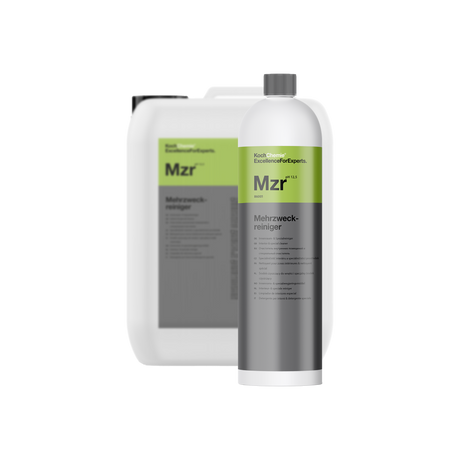
Środek Wielofunkcyjny "Mzr" Środek Uniwersalny
Alkaliczny koncentrat czyszczący, pH 12,5, z aprobatą Daimler
Dostępny (39× 1000 ml / 1 liter · 1× 11kg · 1× 21kg)Od 9,97€Zawartość: 1000mlCena jednostkowa (9,97€ / l)Niedostępne -
Koch-Chemie
Vorreiniger B "Vb" Mycie wstępne
Alkaliczny prewash do aut osobowych i ciężarowych, zgodny z VDA
Dostępny (47× 1000 ml / 1 liter · 6× 5kg · 2× 11kg)Przedsprzedaż (22kg)Od 7,75€Zawartość: 1000mlCena jednostkowa (7,75€ / l)Niedostępne -
Koch-Chemie
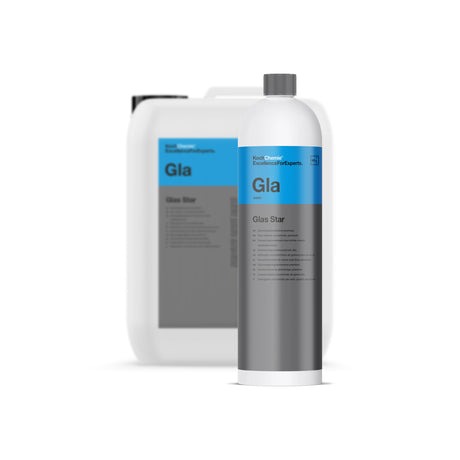
Glas Star "Gla" Koncentrat do Mycia Szyb
Koncentrat do szyb na bazie alkoholu z aprobatą Daimler
Dostępny (7× 1000 ml / 1 liter · 1× 10 liters)Przedsprzedaż (20 liters)Od 8,87€Zawartość: 1000mlCena jednostkowa (8,87€ / l)Niedostępne -
Koch-Chemie
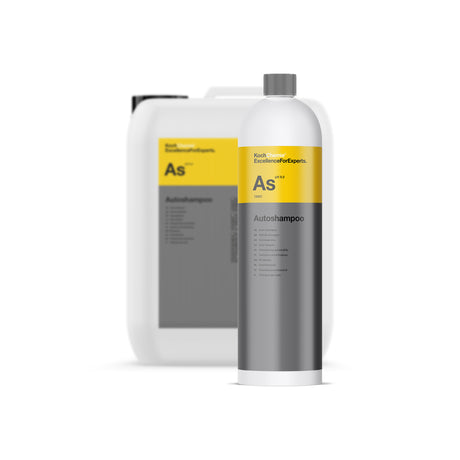
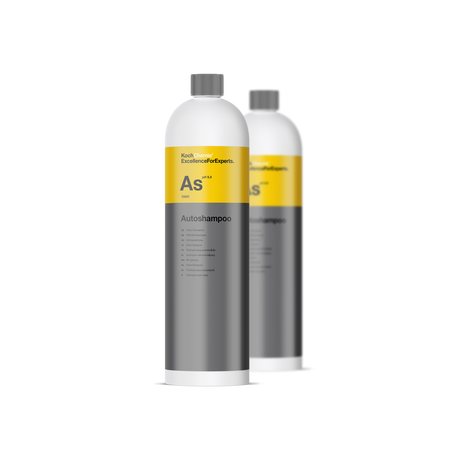
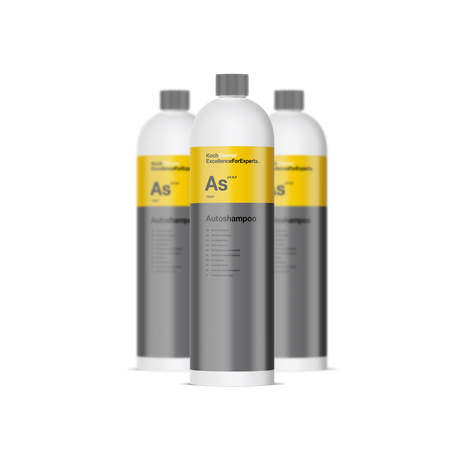
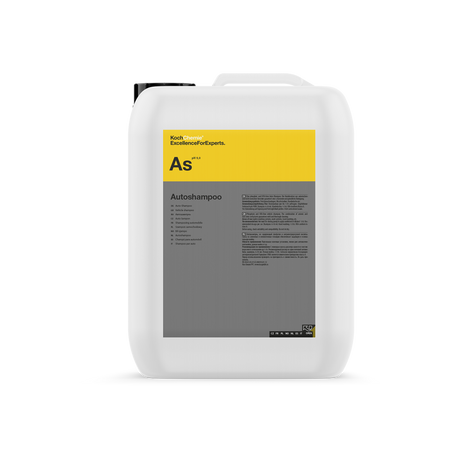
Autoshampoo "As" szampon samochodowy
Czyści dokładnie i delikatnie, zachowuje połysk lakieru
Dostępny (28× 1000 ml / 1 liter · 4× 10 liters)Przedsprzedaż (21kg)Od 7,75€Zawartość: 1000mlCena jednostkowa (7,75€ / l)Niedostępne -
Koch-Chemie
Reactive Rust Remover "Rrr" zmywacz rdzy nalotowej
Maksymalna siła czyszczenia dla perfekcyjnego efektu bez kompromisów
Dostępny (30× 500 ml · 5× 5kg)Domówiony (1× 11kg)Od 16,07€17,74€Zawartość: 500mlCena jednostkowa (32,14€ / l)Niedostępne -
Koch-Chemie
Teerwäsche A "Tea" zmywacz smoły i bitumu
Skuteczny zmywacz bitumu i smoły dla perfekcyjnego wykończenia
Dostępny (18× 1000 ml / 1 liter · 1× 10 liters)Przedsprzedaż (20 liters)Od 9,97€Zawartość: 1000mlCena jednostkowa (9,97€ / l)Niedostępne -
Koch-Chemie
Leather Star "Ls" Pielęgnacja skóry
Gotowa emulsja do pielęgnacji skóry z aktywnymi filtrami UV
Od 14,41€Zawartość: 1000mlCena jednostkowa (14,41€ / l)Niedostępne -
Koch-Chemie
Gummifix "Guf" pielęgnacja gumy i plastiku
Dressing do gumy i plastiku bez silikonu, dywaniki się nie ślizgają
Dostępny (35× 1000 ml / 1 liter · 1× 10 liters)Od 9,97€Zawartość: 1000mlCena jednostkowa (9,97€ / l)Niedostępne -


 Acid-free
Koch-Chemie
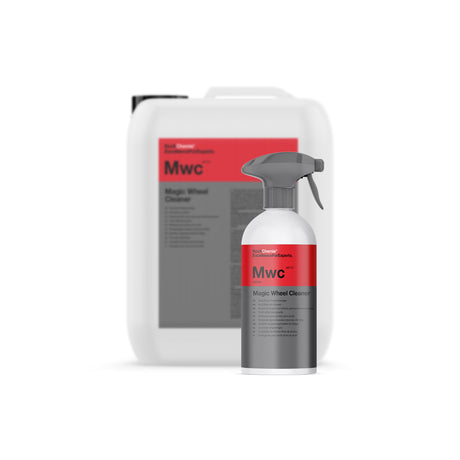
Magic Wheel Cleaner "Mwc" Środek do felg
Bezkwasowy środek do felg ze zmianą koloru na co dzień w warsztacie
Dostępny (34× 500 ml · 1× 10 liters)Od 14,96€16,63€Zawartość: 500mlCena jednostkowa (29,92€ / l)Niedostępne








Produkty z tej kategorii
Pokaż wszystkie-
Acid-free
Koch-Chemie
Magic Wheel Cleaner "Mwc" Środek do felg
Bezkwasowy środek do felg ze zmianą koloru na co dzień w warsztacie
Dostępny (34× 500 ml · 1× 10 liters)Od 14,96€16,63€Zawartość: 500mlCena jednostkowa (29,92€ / l)Niedostępne -
SONAX
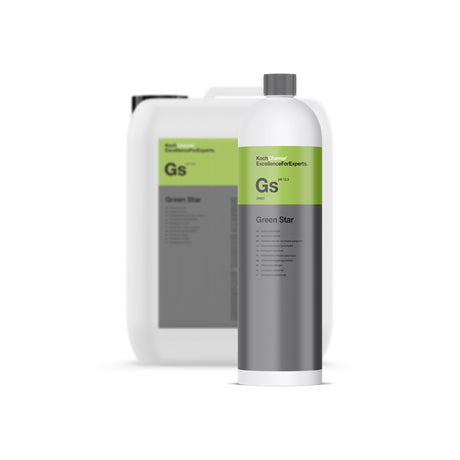
Bezkwasowy środek do felg ze zmianą koloru, do każdego typu felg
Dostępny (11× 1000 ml / 1 liter)Od 14,41€18,85€Zawartość: 1000mlCena jednostkowa (14,41€ / l)Niedostępne -
Koch-Chemie
Felgenreiniger extrem "Fe" zmywacz do felg
Profesjonalny środek do felg na kwasie solnym na wżarty pył hamulcowy
Dostępny (1× 11kg)Przedsprzedaż (22kg)Od 97,61€Zawartość: 11kgCena jednostkowa (8,87€ / kg)Niedostępne -
TUGA Chemie
Alu-Teufel "Spezial"® (Zielony) Płyn do felg
Żel pH-neutralny do felg ze wskaźnikiem działania, do każdej felgi
Dostępny (8× 1000 ml / 1 liter · 7× 5 liters)Przedsprzedaż (20 liters)Od 18,74€Zawartość: 1000mlCena jednostkowa (18,74€ / l)Niedostępne -


 Private Customer Product Range
Koch-Chemie
"ReactiveWheelCleaner" Zmywacz do felg
Nowy poziom czyszczenia felg z tym mocnym cleanerem
Od 22,16€22,18€Zawartość: 750mlCena jednostkowa (29,55€ / l)Niedostępne -
Koch-Chemie
Alkali Wheel Cleaner "Awh" zmywacz felg (alkaliczny)
Mocno alkaliczny koncentrat do felg na profesjonalną codzienność
Dostępny (1× 5 liters)Przedsprzedaż (20 liters)Od 86,51€Zawartość: 5lCena jednostkowa (17,30€ / l)Niedostępne -
TUGA Chemie
Aluminium-Teufel® (Czerwony) Płyn do Felg
Kwasowy środek do felg na mocno wżarty pył hamulcowy
Ograniczona ilość (3× 1000 ml / 1 liter · 2× 5 liters)Przedsprzedaż (20 liters)Od 16,52€Zawartość: 1000mlCena jednostkowa (16,52€ / l)Niedostępne -
Koch-Chemie
Felgenblitz säurefrei "Fb" zmywacz do felg
Skuteczny bezkwasowy środek do felg ze zmianą koloru
Dostępny (2× 11kg)Przedsprzedaż (19 kg)Od 113,14€Zawartość: 11kgCena jednostkowa (10,29€ / kg)Niedostępne -

 EXTREME
SONAX
FelgenReiniger PLUS — wskaźnik działania, każdy typ felg, TPMS
Od 14,41€21,06€Zawartość: 500mlCena jednostkowa (28,82€ / l)Niedostępne -
Koch-Chemie
Triple Acid Star "Ta" zmywacz do felg
Domówiony (1× 11kg)Przedsprzedaż (23 kg)Od 103,15€Zawartość: 11kgCena jednostkowa (9,38€ / kg)Niedostępne -
D-CON
"V4" Wheelcleaner & De-Ironizer Płyn do felg
Skuteczny środek do felg o zapachu lawendy, do każdej powierzchni
Od 9,95€16,58€Zawartość: 500mlCena jednostkowa (19,90€ / l)Niedostępne -


GYEON
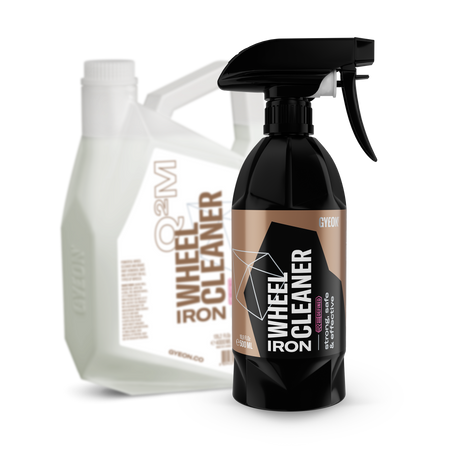
Q²M Iron WheelCleaner (REDEFINED) Środek do felg
Reaktywny środek do felg – rozpuszcza pył i nalot metaliczny
Ograniczona ilość (1× 1000 ml / 1 liter · 3× 500ml)Od 15,53€Zawartość: 500mlCena jednostkowa (31,06€ / l)Niedostępne -


 P21S
P21SDr. Wack "P21S"
Maksymalna siła czyszczenia do wszystkich felg
Dostępny (7× 1000 ml (Limited Edition 2025) · 6× 750ml)Przedsprzedaż (100ml · 2 liters / 2000 ml · 5 liters)Od 8,87€Zawartość: 100mlCena jednostkowa (88,70€ / l)Niedostępne -

 ULTIMATE
Meguiars
Ultimate All Wheel Cleaner do felg
Bezpiecznie usuwa pył hamulcowy i brud z drogi – bez szorowania
Dostępny (21 szt.)17,74€24,29€Zawartość: 709mlCena jednostkowa (25,02€ / l)Niedostępne -


Soft99
Soft99 Iron Terminator zmywacz felg
Nowoczesny cleaner do głębokiego czyszczenia felg
12,19€Zawartość: 500mlCena jednostkowa (24,38€ / l)Niedostępne -
Koch-Chemie × THE FINISHER
Zmywacz do felg THE FINISHER "WheelKing"
Mocny bezkwasowy środek do felg z efektem połysku i beadingu
Ograniczona ilość (5 szt.)17,74€18,85€Zawartość: 500mlCena jednostkowa (35,48€ / l)Niedostępne -


 P21S
P21SDr. Wack "P21S"
P21S "POWER GEL" Zmywacz do felg
Bezkwasowy żel do felg ze wskaźnikiem i czasem przylegania
Ograniczona ilość (4× 1000 ml / 1 liter)Przedsprzedaż (750ml · 2 liters / 2000 ml · 5 liters · 25 liters)Od 6,54€6,65€Zawartość: 100mlCena jednostkowa (65,40€ / l)Niedostępne -


 PROFILINE
SONAX
PROFILINE FelgenReiniger Red Max środek do felg
FelgenReiniger Red Max — kwasowy profesjonalny środek do felg
Od 64,33€92,40€Zawartość: 5000mlCena jednostkowa (12,87€ / l)Niedostępne -
NAP Care
NAP Care "RIM-CLEAN" Żelowy Zmywacz do Felg i Usuwacz Rdzy Nalotowej
Skuteczny cleaner do lśniących i czystych felg
Ograniczona ilość (4 szt.)Od 8,87€22,07€Zawartość: 500mlCena jednostkowa (17,74€ / l)Niedostępne -
NIGRIN
Bezkwasowy żel do felg ze zmianą koloru, do wszystkich rodzajów felg
Dostępny (7× 1000 ml / 1 liter · 1× 5 liters)Przedsprzedaż (25 liters)Od 16,58€Zawartość: 1000mlCena jednostkowa (16,58€ / l)Niedostępne -
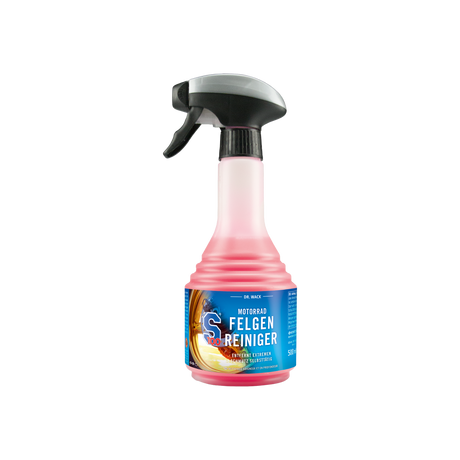
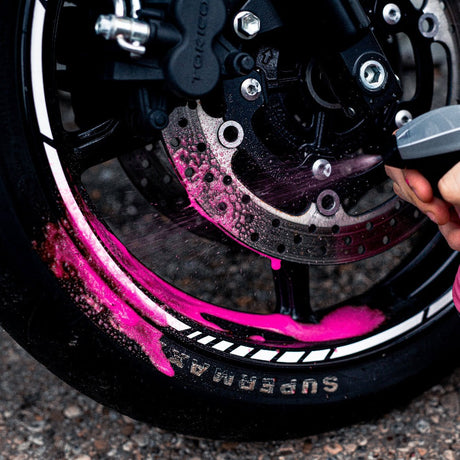 S100
S100Dr. Wack "S100"
Płyn do Felg Motocyklowych "S100" do Motocykli
Skuteczny środek do felg – lśniąco czyste felgi motocykla
Dostępny (2 szt.)Od 17,74€Zawartość: 500mlCena jednostkowa (35,48€ / l)Niedostępne -
Soft99
Digloss Kamitore Wheel and Tire Cleaner Środek do Felg
Środek do felg, który czyści w głąb i chroni
Dostępny (11 szt.)19,40€27,72€Zawartość: 800mlCena jednostkowa (24,25€ / l)Niedostępne -
 ULTIMATE
Meguiars
Ultimate Waterless "Wheel and Tire" Detailer do mycia na sucho
Mycie felg bez wody i pielęgnacja opon w jednym produkcie
21,06€27,62€Zawartość: 709mlCena jednostkowa (29,70€ / l)Niedostępne -
TUGA Chemie
Biker's Felgen-Teufel® płyn do felg do "motocykla"
Bezkwasowy środek do felg motocyklowych ze wskaźnikiem chelatowym
Dostępny (10× 1000 ml / 1 liter)Od 22,07€Zawartość: 1000mlCena jednostkowa (22,07€ / l)Niedostępne






Detailing101
Pokaż wszystkie-

Sealant czy wosk: 5 sytuacji, które rozstrzygają przed zimą
Daniel von Detailing1 |
-

Jak prawidłowo myć i pielęgnować matowy lakier i matową folię
Daniel von Detailing1 |
-

Zaschnięta żywica na lakierze auta: najpierw rozpuść, potem zabezpiecz
Daniel von Detailing1 |
-

Zaschnięte plamy z wody na aucie: kwas czy polerowanie?
Daniel von Detailing1 |
-

Jak usunąć naklejkę z auta: patent na resztki kleju
Daniel von Detailing1 |
-

Glinkowanie auta: kiedy lakier potrzebuje go przed zimą
Daniel von Detailing1 |
-

Osuszanie auta: 5 mitów, przez które na lakierze zostają plamy z wody
Daniel von Detailing1 |
-

Jak przechowywać opony: dlaczego felga musi być wcześniej czysta
Daniel von Detailing1 |
-

5 błędów przy myciu nadkoli, które szkodzą ich krawędziom
Jasper von Detailing1 |
-

Zadbaj o uszczelki drzwi, zanim w pierwszą mroźną noc drzwi przymarzną
Daniel von Detailing1 |
-

Jak usunąć wypalony pył hamulcowy, zanim przyjdzie sól drogowa
Daniel von Detailing1 |
-
5 stref felgi, które wymagają innej szczotki
Jasper von Detailing1 |