Washing your car in winter: 5 mistakes that keep road salt working
Daniel von Detailing1 |



Koch-Chemie
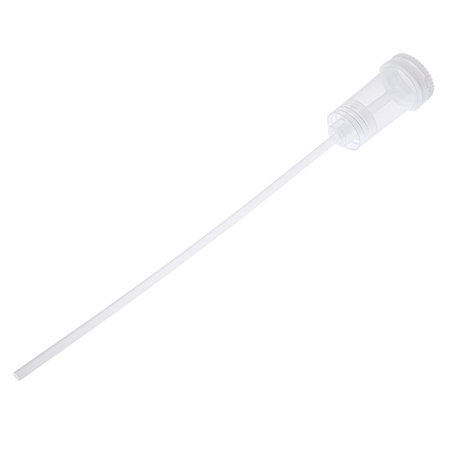
"Dosing Cap" Dosierkapp fir 1000ml / 270mm Floschen
Doséierkapp mat 5-ml-Skala fir Koch-Chemie 1-Liter-Floschen

Koch-Chemie
Auslaaffahn fir Koch-Chemie Kanister


YETI
LoadOut® GoBox 60 Gear Case Ausrüstungsbox (groß)
Ultimativ Léiwungslaas fir Autopfleg-Hardware


YETI
LoadOut® GoBox 30 2.0 Gear Case Ausrüstungsbox mat Tragegourtem
Robust a versäit Ausrüstungsbox fir optimal Organisatioun


YETI
GoBox Caddy / Insaz fir "LoadOut® GoBox"
Perfekt Organisatioun fir deng Auto-Pflege-Auschtattung


YETI
GoBox Divider / Trennwand fir "LoadOut® GoBox"
Robust Trennwand fir YETI LoadOut® GoBox


YETI
LoadOut® GoBox 15 Gear Case Ausrüstungsbox (klein)
Robust, vielsiitig Ënnerbrungsléisung fir Abentéier


YETI
LoadOut® GoBox 1 Gear Case Ausrüstungsbox (Mini)
Waterproof mini box for keys, phone and small parts

Koch-Chemie
Maskéiertape "50m" (Kleebeind mat Reschtloos)
Präzis Ofbleifband ouni Reschte
Koch-Chemie
Bottle & Brush Holder Halterung fir 5x Fléschen & Pinsel

SONAX
PROFILINE Kënschtlech Aflosshahn Dosagehëllef
KunststoffAblasshahn — Dosagehëllef fir 3-L- an 5-L-Kanister
Koch-Chemie
Glove Dispenser Spender fir Einweghannschoen
What are detailing aids? The tools that sit next to the chemicals: a dosing cap and a drum tap for the right amount, masking tape before polishing, tyre hose guides for hose and cable, scrapers for stickers, and boxes or wall mounts to keep things tidy. They don't replace the dilution on the label or frost-free storage.
Detailing aids are the small tools in car detailing that contain no chemistry of their own and still have a say in the result. They get concentrate out of the drum or bottle in measured amounts, keep the polisher off rubber and plastic trim, keep the hose out of the gap under the wheel, lift stickers off glass and keep towels, pads and bottles organised. What that means for you: you can end up with a stain on a seal even when the product is right.
Detailing1's tip from the shop: Never pour concentrate straight from a 5 or 10 litre drum into a spray bottle. On forums, people get by with syringes, kitchen scales and laundry detergent caps, because small amounts are hard to hit otherwise. Draw it off through the drum tap into a measuring jug or fill a 1-litre bottle with a dosing cap, then measure and add it to the water that's already in the bottle. That way the manufacturer's dilution stays the same, whoever mixes it.
Detailing aids prevent mistakes that don't come from the chemicals: wrong amounts, polish on rubber, trapped hoses, scratches when removing stickers and loose gear rattling around the boot.
The product can be right and the result still off. A cleaner mixed by eye from the drum works too hard or not hard enough. Koch-Chemie states in its own dilution guide that too little water can attack vehicle parts and too much water cuts cleaning power. You only notice either one on the car, not while filling up, and then you make up for it by pressing harder with the towel.
When polishing, it's the trim next to the paint. Rubber and unpainted plastic can turn hard or blotchy from polish, detailingwiki notes, which is why edges get taped off first. When washing, it's the hose that ends up under the tyre. On the inside of the rear window, it's the blade running across the heating wires.
None of these mistakes has anything to do with the product in the drum. Each one comes down to a single step that has its own tool. That's why detailers don't talk about one catch-all term, but about dosing caps, drum taps, masking tape, hose guides, scrapers and gear boxes.
The tools in this category sort into five jobs: dosing, guiding hose and cable, removing, masking, and organising and transporting, each with its own sub-page.
Dosing starts at the container. The drum tap replaces the cap on the drum, so you draw product off instead of lifting and tipping a full drum. The dosing cap works on the 1-litre bottle, and a measuring jug works with any bottle. Which tool is meant for which step, and how to convert a mixing ratio into millilitres, is covered on the dosing aids page.
Hose and cable are handled by the tyre hose guide. It goes against the wheel before the first blast of water and steers the garden hose, pressure washer hose or polisher cable past the tyre. A hose reel doesn't replace it, because a reel solves a different problem, namely length and winding up.
Removing is the job of scrapers for glass and paint. A metal blade belongs on glass, a plastic blade on paint, plastic and film residue. The adhesive film left underneath comes off afterwards with an adhesive remover, not with the blade.
When machine polishing, masking means masking tape: a thin tape made for automotive paint that peels off without residue. It covers seals, unpainted plastic and edges before the pad starts spinning. Which tapes are available and why decorator's tape isn't built for this is explained on the masking tape for polishing page.
Organising and transporting go two ways. Storage boxes carry towels, pads and the machine out to the car, wall mounts give bottles, polisher and pads a fixed spot. The box is for on the go, the mount for the place where you always work.
Every detailing aid has to fit something you already have: the cap to the bottle, the tap to the drum, the blade to the surface and the box to what goes inside it.
For dosing, the thread decides. According to the product details, the Koch-Chemie "Dosing Cap" is built for the Koch-Chemie 1-litre bottle and won't fit drums from 5 litres up. The Koch-Chemie drum tap is designed for Koch-Chemie drums. According to SONAX, the SONAX drain tap has a standard thread for 3 and 5 litre plastic drums, including SONAX's own. Check whether your drum has that thread before you buy. Koch-Chemie makes no promise that the Dosing Cap or its tap fits other brands' containers, so we don't either.
Then there's the chemistry running through the part. According to Koch-Chemie, the Dosing Cap isn't suitable for products containing acids or solvents. So if you're mixing an acidic wheel cleaner, you need a different route than this cap. If you're dosing shampoo or an alkaline cleaner from the 1-litre bottle, it's exactly the right tool.
For removing, the surface decides. Metal only goes on glass, and only wet and flat. On the inside of the rear window, where the heating wires run, a blade has no business being there, according to carfoil.ch; film is peeled off parallel to the wires, never across them. What that means for you: the blade stays in the box there, however stubborn the sticker.
For masking, the edge decides. The tape has to be heat-resistant and peel off without residue, and you pull it off flat so it doesn't lift anything from a respray. For storage, the inside dimensions decide: accessories like the GoBox divider only fit their own box size.
A detailing day uses the tools in a set order: mix first, then lay out hose and cable, remove after the wash, mask before polishing and pack everything away at the end.
Mixing comes first because the working solutions should be ready before the car gets wet. The route goes from the tap on the drum into a measuring jug, or through the cap into the spray bottle that already has water in it. That's also how detailers on the German autopflegeforum decant their drums into matching spray bottles. Labelling is part of the job, as described under spray bottles and pump sprayers: one sprayer per product.
Put the hose guides under the tyres before you start, which is how Koch-Chemie describes it for the Hose & Cable Guard. Once the hose is stuck under the wheel, you end up yanking it out under tension, and that's exactly when it drags across the sidewall or bumper. If you machine polish as well, run the cable over the guide at the same time.
Stickers and film residue come off after the wash, once the glass and paint are clean. Masking comes after that, right before polishing, because masking tape only sticks to a clean, dry, grease-free edge. Tape panel by panel rather than the whole car at once, otherwise you're left with strips at every edge that no polishing stage reaches.
At the end, the tools become cargo. A full box, a bucket and a drum go at the bottom of the boot, packed tight against each other and secured with straps rather than bungee cords, as Germany's ADAC motoring club advises. According to Koch-Chemie, keep car care products away from frost and high heat. In plain terms: the drum rides along for the job, it doesn't spend the winter in the boot.
On this page, Koch-Chemie covers dosing, masking and hose routing, YETI the storage, and SONAX adds a cap for its own 1-litre bottle and a tap for drums with a standard thread.
The Koch-Chemie "Dosing Cap" is one of the most-ordered items in this category. It replaces the closure on the Koch-Chemie 1-litre bottle and stays there as long as the bottle is in use.
For drums there's the Koch-Chemie drum tap for Koch-Chemie drums in 5 litre and 10 litre versions, an accessory for its own drum family rather than a universal part. For 3 and 5 litre drums with a standard thread there's the SONAX PROFILINE plastic drain tap.
The Koch-Chemie Masking Tape "50m" comes in 19 mm x 50 metres and 25 mm x 50 metres. The narrow tape suits trim strips and headlight edges, the wide one seals. The Koch-Chemie Hose & Cable Guard comes as a set of 2 and, according to the manufacturer, guides hose and cable alike.
For storage, this page carries the YETI GoBox range. You carry the YETI LoadOut® GoBox 30 2.0 Gear Case to the car by its strap, and according to the product description the YETI LoadOut® GoBox 60 Gear Case has room for a polisher too. For fixed spots on the wall, there are metal Koch-Chemie holders, such as the Trigger Holder for about five spray bottles or the Polisher Holder for polishers with a backing plate up to 180 mm.
Scrapers have their own page. Which blade belongs on which surface and when it needs changing is covered in detail in the scrapers sub-category. Which GoBox size holds what is sorted out on the storage boxes page, so this overview can stay focused on the jobs.
If you rarely dose and store at home, a measuring jug and a plain crate often do the trick, but when machine polishing, decorator's tape is no substitute for masking tape made for automotive paint.
A measuring jug works with any bottle and any drum, it just costs you one extra step. For a few millilitres, though, the scale on a kitchen measuring jug is often too coarse, as people on forums complain. The cap pays off if you mix the same concentrate several times a week. A plain plastic crate is fine for dry towels on a shelf, while the box earns its keep once your kit rides along in the car regularly.
That doesn't apply to masking. Decorator's tape is built for paint lines on walls, but when you polish, friction and heat act directly on the tape. People on forums report adhesive residue that decorator's tape left behind on paint and seals. Here the specialist part isn't a luxury, it's what saves you a round of rework with adhesive remover.
If you work often and in one fixed place, you'll get the most out of a tap on the drum and wall mounts that give every part its spot. If you only wash and polish on the driveway, you're better off with a box that takes everything to the car in one trip and then disappears again. Setting it all up takes longer the first time, that's part of the deal.
Three limits belong in an honest assessment. A box protects the kit, not the chemicals, and doesn't replace frost-free storage. A dosing cap doesn't replace the dilution on the label, it just makes it repeatable. And Koch-Chemie gives no maximum hose diameter for the hose guide, so check the fit with your own hose.
The same rule goes for all five jobs: the chemicals are dosed by the data sheet, and the accessories deserve the same care. Skip it and you get mistakes that cost you rework later: stains on rubber, adhesive residue on the edge, damage to the rear window. Choose every part by fit and by job and you save yourself that rework. You'll find the whole range under car care accessories.
Zu viel Auswahl? Lass dir bei Detailing aids helfen:
Detailing1 bei Google als bevorzugte Quelle hinzufügenDat hänkt vun der Handwierk of. Eng Dosierhëllef braucht du, soubal du Konzentrat verdünns, vir der Maschinnpolitur gheet Masking Tape un Dichtungen an Leisten. Eng Umlenkroull lohnt sech, soubal Schlauch oder Kabel un der Bord um d'Auto loufen. Eng Schaber brauchst du, wann Aufkleber duerf ginn, Box oder Wandhalter, soubal d'Auschtattung wächst. Kéint vun dësen ersetzt keng Chemie.
Sou genau, wéi de Produzent d'Mëschungsverhältnong angëtt. 1:5 hees laut Koch-Chemie 1 Deel Konzentrat plus 5 Deeler Wat, zum Beispill 10 ml op 50 ml. Zoustark anzesetzt kann Chemie Fahrzeugdeeler beaflossen, ze schwach reinigt se méi net. Fir kleng Quantitéiten hëlleft eng Kapp mat 5-ml-Skala, d'Umrechnen erklären d' Dosierhëllefen.
Teilweis. Eng Messbecher aus der Kéich taugt fir méi grouss Quantitéiten, fir e puer Milliliter ass seng Skala oft ze grob. Fir drocken Tücher an der Regal reicht eng einfach Kist. Malerkrepp ass géiggestell fir Faarfkanten, net fir Reebung an Hëtze unner der Poliermaschin. Zum Polieren gheet dofir Masking Tape fir Fahrzeuglack.
Wéi all eng Kéier: schwéier un den Ëng, lückenlos uneneb uniweider an mat Gurten anstatt Expandern versekert, sou empfielt et de ADAC. Eng voll Kanister oder eng voll Box rutscht anztell beim Bremsen no vorn. Pflegemëttelen schützt du laut Koch-Chemie och vir Frost an staarker Hëtze, dofir bleifen se no der Iwwerzong net dauerhaft am Auto.
Alles, wat an engem Gang zum Auto kënnt an no ëmmer verschwënt. Eng Aufbewahrungsbox wéi déi YETI LoadOut® GoBox 30 2.0 Gear Case mat Tragegurt nimt Tücher, Pads an Flaschen mat. Wandhalter lohnen sech erst, wann du en feste Plaz mat enger tragfähiger Wand hast, denn wéi vill se halen, entscheet d'Wand.
Zuerst doséieren an d'Arbeitslösung anzesetzen, vir de Auto vu wäit ass. Dann d'Umlenkroullen un d'Reifen loen an wäschen. No der Wäsch lösen Schaber Aufkleber an Folierest, no ëmmer klebst du vir der Politur Bauteel fir Bauteel ab. Zum Schluss gëtt alles drocken verstaut an am Kofferraum géig Verrutschen versekert.
Daniel von Detailing1 |

Daniel von Detailing1 |

Daniel von Detailing1 |

Daniel von Detailing1 |

Daniel von Detailing1 |

Daniel von Detailing1 |


Daniel von Detailing1 |

Daniel von Detailing1 |

Daniel von Detailing1 |

Daniel von Detailing1 |

Daniel von Detailing1 |