Washing your car in winter: 5 mistakes that keep road salt working
Daniel von Detailing1 |


Koch-Chemie × COLOURLOCK
COLOURLOCK "Fresh Up" Géierneutralisator mat frëschem Duft
Frëssche effektive Géierneutralisator fir Interieur an Léider


Meguiars
ULTIMATE Air Re-Fresher fir den ganze Auto Lufterfrischer Aerosol
Odoreliminéierend voll Aerosolbehandlung — ULTIMATE-Formel


Meguiars
Island Volcano Air-Refersher Lufterfrischer Aerosol
Re-Fresher Lufterfrischer, 2 oz (59 ml)


Meguiars
Air Re-Fresher Whole Car Géierduchschter
Dauerhaften Geruchsnichte fir de ganze Faarfouerinnenraum

INNOVACAR
"ESSENTIALS KIT" Probierpaket 4x50ml ("X2"+"W1"+"0"+"N0")
Probierset mat fäir Innovacar-Basics am 50-ml-Format
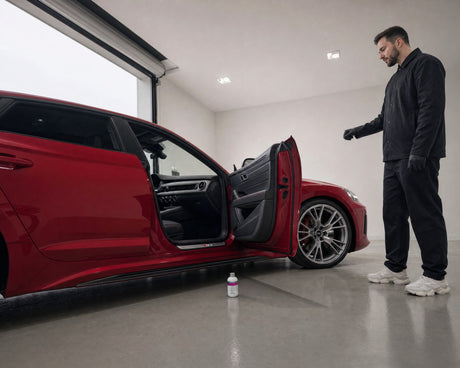
COLOURLOCK "Fresh Up" neutraliséiert Geréng am Innenaum, mat engem frësche Duft.

GYEON
Q²M OdorRemover "Purify Line" Géierchentfermer
Odor Remover Purify Line – neutralizes instead of masking


CarPro
"So2Pure" 2.0 Air-Purifying-Coating Géierverniichter
Innovativ photokatalytesch Innestroum fir rein Loft


Meguiars
Stargazer Air Re-Fresher Lufterfrischer Aerosol
Aerosol-Luftfrëschscher mat wierklecher Géierelimination


Meguiars
Tropical Rainforest Air Re-Fresher Lufterfrischer Aerosol
Aerosol-Geruchseliminator mat tropesch-frëschem Duft


Meguiars
Dubai Sands Air Re-Fresher Lufterfrischer Aerosol
Orientales Geruchsnichtecker mat Mëllessalz & Mandarin


Meguiars
Carpet & Cloth "Re-Fresher" Géierchentfermer
Odorentfermer-Spray fir Polster, Teppich an Textilien


INNOVACAR
Frësch Interiéier dank engem innovativem Geruchsentferner
Car odour removers help you target unwanted cabin smells. The odour source, affected material and appropriate procedure determine the choice. Compare textile sprays with total-release cabin aerosols and find out why preliminary cleaning, material checks and subsequent ventilation belong in your decision.
Car odour removers treat substances that cause smells inside a vehicle. Depending on the product, they may bind these substances, for example. Apply the product to selected surfaces or distribute it as a fine mist through the cabin. An odour neutraliser can still leave a fragrance of its own. The term therefore means neither fragrance-free nor disinfecting. Choose by approved material and application: a textile product is used differently from a total-release aerosol.

Smoke in a used car, a leaking shopping bag and the smell of a damp floor mat present different tasks. Before choosing a product, look under the seats, in the boot and at the affected coverings. Remove accessible residue and establish whether any surface is still wet. Find suitable interior cleaners for the preliminary clean; choose the subsequent odour treatment afterwards.
Detailing1 practical tip: Read the complete label on a Meguiar's Air Re-Fresher can before activating it. Schedule the 15-minute treatment stated in the German instructions after preliminary cleaning. Leave the vehicle during use and ventilate thoroughly afterwards. Reassess the original smell later rather than immediately treating the fresh fragrance as proof that its cause has been fully resolved.
Choosing a suitable odour remover starts with finding the cause, because adding fragrance does not remove remaining residue or damp materials.
With a spilled drink, the affected spot matters first. Smoke odour, by contrast, can involve several cabin areas. Distributing a product indiscriminately throughout the car does not address those differences. Look for accessible residue and check which surfaces you can clean according to the vehicle instructions. The type of dirt and material compatibility guide the next step.
Include loose items such as wet sportswear, pet blankets or forgotten food in this inspection. If you can take them out, treat the vehicle and item separately. Follow the care instructions for mats, covers and blankets. What is allowed for a removable textile mat does not automatically apply to a bonded headlining or an installed seat.
Dirty seat fabrics and carpets first need a suitable upholstery cleaner. It should loosen the relevant residue and allow you to remove it. A subsequent odour neutraliser does not replace this cleaning step. Equally, not every cleaned surface needs added fragrance: after complete drying, check whether an unwanted smell remains at all.
If the cabin repeatedly becomes damp, spraying again is not an adequate solution. Check visibly affected areas and have the cause assessed professionally if needed. The same applies to a smell that appears mainly when the ventilation starts. You can choose suitable care only once it is clearer whether the task concerns a covering or the vehicle’s equipment.
This order also helps when buying. Targeted spray application on a small, suitable textile area is a different choice from treating an empty cabin with a can. Choosing the strongest fragrance first may temporarily make the original smell harder to assess without having removed its source.
A textile spray treats suitable surfaces directly, whereas a total-release cabin aerosol distributes its fine mist through the ventilation circulation as instructed.
For the first approach, consider the odour neutraliser COLOURLOCK "Fresh Up" 1000 ml / 1 Liter. Koch-Chemie lists textiles, upholstery, vehicle headlinings and room air among its uses. Thorough preliminary cleaning and a test on the actual material are prerequisites. Spray sparingly afterwards; this does not establish a fixed quantity per car seat.
With a total-release can, distribution forms part of a prescribed sequence. Here, an aerosol is a fine mist in the air. The specified ventilation setting carries it through the cabin. You therefore do not hold the product and spray a single dirty spot as you would a stain treatment. The packaging format is an important clue to preparation.
The odour-removing aerosols selection defines this format. Plan one can as a single treatment. The 59 ml in the two featured variants is not a working solution to mix with water. Comparing by millilitres alone is unhelpful because application and treatment are organised differently.
Odour neutralisation and fragrance are not mutually exclusive. Fresh Up leaves a fresh scent according to its manufacturer, and the selected Meguiar's cans also have expressly described fragrance notes. If strong fragrance bothers you or you want as neutral a smell as possible, check this characteristic before buying. “Odour remover” does not mean fragrance-free.
If your already-clean cabin mainly needs a fragrance you enjoy, browse car fragrances. If a particular unwanted smell remains, focus instead on the source and suitable treatment. A pleasant note is a product characteristic, not proof that damp upholstery or deposits have disappeared.

For textiles, specific material compatibility together with a hidden test determines whether an odour neutraliser can be used appropriately after cleaning.
Check the covering’s care guidance and the product instructions first. For Fresh Up, Koch-Chemie expressly asks you to check visual and tactile changes: the test area should not only look unchanged but feel the same too. A broad statement such as “for interiors” does not replace that comparison on the actual material.
Remove the accessible odour source before application. Liquid residue in upholstery requires suitable cleaning followed by removal of the loosened material. Only then comes odour treatment. During preparation, avoid transferring extra residue from a dirty cloth or tool and unnecessarily soaking the cleaned area again.
Shake Fresh Up before use, then spray sparingly on the approved area. More liquid does not automatically mean better treatment. The instructions specify neither a general number of sprays per seat nor a dilution ratio for this use. Do not borrow a mixture from a similarly named cleaner or another odour remover.
Vehicle guidance is especially useful for delicate, bonded or layered surfaces. Listing headlinings as an application does not mean you should soak or vigorously work them. Leather, imitation leather and microfibre materials also need explicit compatibility. The same smell does not mean all affected surfaces may receive the same treatment.
Allow the treated surface to dry fully and assess the result afterwards. A fixed number of hours would be unreliable without knowing the covering, moisture and local conditions. If the smell remains, first review its source and the cleaning already carried out. A blanket plan for two or three repeat treatments does not replace that check.
A total-release odour-removing can needs a prepared, empty cabin and thorough ventilation afterwards, so do not schedule treatment immediately before a necessary journey.
For Meguiar's Air Re-Fresher, the German instructions describe treatment after cleaning with the ventilation running on recirculation. This circulates the existing cabin air. Position the can securely according to its label and activate it before leaving the vehicle. People and animals stay outside the cabin throughout treatment.
The specified 15 minutes refer to the closed treatment phase. A can may stop emitting visible mist earlier; spray duration and the prescribed circulation time are different things. Follow the instructions on your particular can. Do not shorten the procedure simply because you can no longer see a spray through the window.
Also observe warnings about heat, ignition sources and spray mist. If the prescribed procedure requires a combustion engine to run, do not carry it out in an enclosed space. Odour treatment must not create an exhaust-fume hazard. Read the instructions before activation so the can position, settings and exit from the vehicle are prepared.
Ventilate thoroughly after treatment. The German manufacturer instructions do not provide a universally applicable waiting time in minutes that applies to every cabin. Allow enough time and follow the packaging guidance. A cabin that still smells strongly of fragrance is no reason to activate a second can straight afterwards.
The process distributes the product but does not replace physical removal of deposits in the air-conditioning system. ADAC distinguishes these click-activated cans from proper system cleaning. If smells repeatedly emerge from the vents, have the system checked. Calling a can a general disinfectant or an air-conditioning service would overstate its purpose.

The appropriate choice depends on your preferred application and the product’s scent. Product names alone do not prove stronger performance or identical formulas.
Fresh Up suits targeted follow-up treatment of compatible textile areas. You can restrict application to the approved surface without activating a total-release can. That changes the routine but does not guarantee that every deep-seated smell disappears in one pass. Preliminary cleaning remains the common foundation.
For the can format, one option is the cabin odour remover Meguiar's "ULTIMATE Whole Car Air Re-Fresher" 59 ml. The current German product description lists pineapple, cherry and pomegranate fragrance notes. Choose it consciously for that scent profile too. ULTIMATE does not mean an independent comparison has proved stronger odour removal than every other variant.
The odour remover Meguiar's "Tropical Rainforest Air Re-Fresher" 59 ml uses mango, lotus blossom and tonka bean notes according to the German manufacturer description. The can procedure is part of this decision too. A different fragrance does not allow arbitrary changes to application quantities or repeat intervals. Check your chosen variant’s instructions.
Two practical questions help the comparison: do you want to treat one suitable surface or schedule a separate whole-cabin cycle? And do you want the described fragrance in the car afterwards? Those answers are more useful than a general ranking. They consider your routine and avoid expecting the biggest name on the label to solve every cause.
Fixed promises about duration are not especially helpful. In an actual Fresh Up customer review, the buyer rates the product positively while wishing it lasted longer. That is one experience, not a general measurement. It nevertheless illustrates why you should choose an odour remover for the appropriate task rather than assume a set number of odour-free weeks.
If an unwanted smell returns after treatment, review its source instead of automatically applying more product or extra fragrance cans.
First compare where and when you notice it. Is it a particular mat, a seat after drying or the air only after starting the ventilation? This observation helps narrow down the next step. It is not yet a technical diagnosis, but it prevents treating every problem with the same spray routine.
For textiles that remain dirty, material-appropriate cleaning is still decisive. Recurring dampness requires its cause to be resolved. If residue has penetrated deeply or care instructions are unclear, professional support is more useful than increasingly strong home experiments. This does not establish a general recommendation for ozone, aggressive household remedies or combining several odour removers.
Smoke odour calls for a thorough look at the affected cabin areas. Spraying only the middle of a seat is not an inspection of the whole vehicle. Treat accessible surfaces according to their own requirements and have technical areas assessed if needed. Promising complete removal of every case of long-standing smoke contamination would be unreliable without examining the actual car.
Vomit or spilled food also requires residue removal first. A spray mist cannot do that work. Get help if you cannot reach the affected area adequately or the covering remains unusual after suitable cleaning. Do not use a product’s fresh fragrance as proof that invisible residue has also been fully removed.
The selection criteria therefore remain clear: a suitable accessible surface, verified material compatibility and the prescribed procedure. Fresh Up complements targeted treatment; the featured Meguiar's cans provide a separate cabin cycle with their own scent. Start with the cause, prepare the application fully and reassess the result after drying or thorough ventilation.

Zu viel Auswahl? Lass dir bei Odour remover helfen:
Detailing1 bei Google als bevorzugte Quelle hinzufügenEn Geruchsneutralisierer behandelt geruchverursechend Stoffen, zum Beispill duerch Bindung. D'präzis Prinzip hänkt vum Produkt of. Och sëlch Mëttel kënnen en eegen Duft hinterlosse. Si entfernen net automatesch Schmutz oder Feuchtigkeit an sinn net pauschal Desinfektionsmëttel. Deswoucht ëmmer zouverst d'Ursach beseitigen, passend Fläch reinigen an ännereg no Materialfreigab an Produktanleitung behandelen.
Sich an éischter no de betroffenen Innere-Bereechen an reinigen zugänglech Oberflächer mat respektiv geeignene Mëttel. Nur Duft hinzuzufügen ersetzt dës Preparatioun net. Danno kann en passenden Geruchsentferner no senger Anleitung ergänzen. Bei tüppelsëttendem oder widderkehrendem Rauchgeruch ass eng fachlech Beurteilung sinnvoll; eng enzelne Awendung garantéiert keng vollstaendig Beseitigung vun all Alterbelastungen.
En Textilspray wéi COLOURLOCK "Fresh Up" gëtt gezielt op geeignende, vorbereite Fläch applizéiert. Eng selbsterleend Meguiar's Air-Re-Fresher-Doss verteilt hir Spréihnebel am vorgesehenen Ablauf iwwer d'Lüftungszirkulation. Dofouer mussen Mënschen an Dieren d'Fuerg verlassen; ännereg grondgeng lüften. Wielt no Aufgaben an Materialfreigab. Beid hei vorgestellt Arten besëtzen en eegenen Duft.
Dat hänkt vun der konkreter Produktfreigab an de Pflegehinweisen vum Material of. Eng allgemeng Innere-Empfehlung rächt net fir all Liederart oder all Mikrofaserbezog. Prüeft d'Eegentlech ausdrécklech an testet un enger verdeckter Stell op Verännerungen an Aussehen an Griffe. Iwwert d'Freigab net vun engem aneren Produkt op Ären Mëttel.
Entfernet zouverst d'erreichlech Reschte an reinigen d'betroffenen Fläch materialgerecht. En Geruchsentferner ersetzt dës Aarbecht net. Loosse gereinigte Textilien vollstaendig trocknen an prüeft, ob nachoucht Geruch zréck bleift. Wann Reschte tüppelsëtt oder net erreechbar sinn, ass fachlech Unterstützt sinnvoll. Eng zousätzlech Duftdoss ass keng Beweisen, datt d'Geruchsquell beseitigt gouf.
D'15 Minut vun der däitscher Herstelleranleitung beschreien d'geschlossene Behandlungsphase, net eng zousicherte sichtbuer Spréidauer. Halten d'Ablauf vun Ärer konkreter Doss un, verlassen d'Fuerg während der Awendung an lüften ännereg grondgeng. Vorreinigung an Nachlüften kommen ënner Zäit dobäi. Falls en Verbrennungsmoer dofir lauft, däerf d'Awendung net an geschlossene Räume stattfannen.
Klär, ob déi betroffe textil Fläch wéi Material- an Fahrzeughinnweis mat Fresh Up behandelt däerf ginn. Sëch no erreechbaren Reschte oder Feuchtigkeit. Bei bleibender Nässe, onklaren Materialvorgaben oder net erreechbaren Geruchsquellen hol zäuerst fachleche Rot un.
Entfern d'Geruchsquell an reinig d'freigeeben textil Fläch mat engem passende Mëttel no sengem Anleitung. Nim d'gelöste Reschte op an looss d'Fläch dréien. Eng Geruchsbehandlung ersetzt dësen vorbereitende Reinigungsschritt net.
Schüttel Fresh Up virun der Gebrauch an iwwerpréif et un enger net uffallender Stell. Vergläich d'Uusginn an d'Griff vum Material. Benotz d'Mëttel op der vorgesehener Fläch nëmmen, wann d'Eegentlechke klärt ass an de Test keng onwënscht Verännerungen weist.
Spréien de vorbereite Beräich sparsam no der Produktanleitung. Vermeid onnéideg durchnässen. Benotz keng selwer erfunden Verdünnungsrezept an überträit keng Mengen oder Zäite vu änneren Geruchsentferneren op Fresh Up. Beachte d'Hinnweis op dem Gebind.
Looss d'behandelt textil Fläch ganz dréien an iwwerpréif de urschwëngleche Geruch weider. Plan keng fest Zuel vu Wiederholungen un. Wann de Geruch bleift oder Feuchtigkeit zréckkeet, kontrollier d'Ursach an hol bei Bedarf fachlech Ënnerstëtztung un.
Daniel von Detailing1 |

Daniel von Detailing1 |

Daniel von Detailing1 |

Daniel von Detailing1 |

Daniel von Detailing1 |

Daniel von Detailing1 |


Daniel von Detailing1 |

Daniel von Detailing1 |

Daniel von Detailing1 |

Daniel von Detailing1 |

Daniel von Detailing1 |