Washing your car in winter: 5 mistakes that keep road salt working
Daniel von Detailing1 |


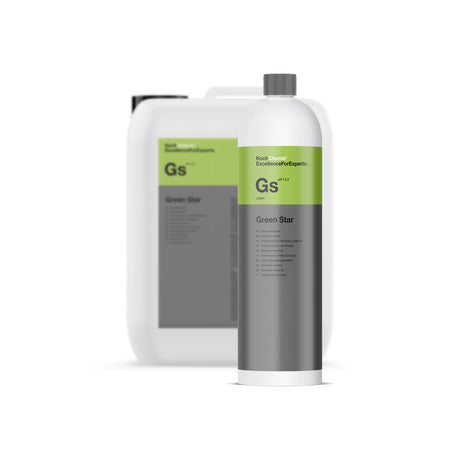
Koch-Chemie
Reactive Rust Remover "Rrr" Fliegeroschtentfermer
Maximum cleaning performance for flawless results without compromise
GYEON
Q²M Iron (REDEFINED) Fliegerostentfermer
pH-neutralen Flugrouschtheffer mat Gelformel an Faarfindikator
D-CON
"Light" Pre-Cleaner & De-Ironizer Flugrostentfermer
Eisenpartikelen sécher entfernen fir gléin Auto-Lack


TUGA Chemie
Flugrost-Teufel® Flugrostentferner
pH-neutraler Lack-Dekontaminator mat Wirkinindikator (Iron-Remover)


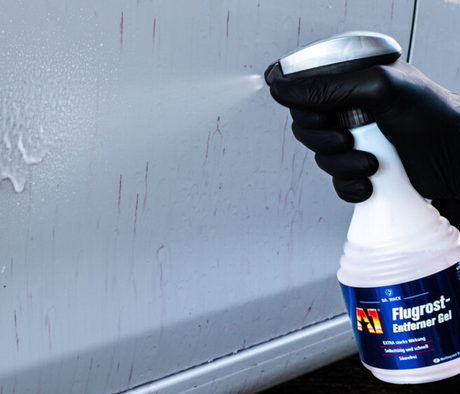
Dr. Wack "A1"
A1 "Flugrost-Entferner Gel" Flugrostentferner
Säurefreies Gel géint Fluchrost op Lack — mat Wirkinindikator

Vorfäiger verléieren de Straßefilm an Bremsstaoub d'Adhésioun.


SONAX
PROFILINE FlugrostEntferner "KraftReiniger Sauer" Eisenentferner
FlugrostEntferner "KraftReiniger Sauer" — sauren Eisenentferner Profi


Meguiars
Ultimate Iron Remover Flugrouschtheffer
Chemëscher Flugrostentfermer mat Faarfindikator — violett = Reaktioun


INNOVACAR
Effektivem Flugrostentfermer fir Felgen an Karosserie


CarPro
"TriX" Flugrost- & Teerentfermer
Ultimativ Léisung fir Fluchrost an Teerenféierung
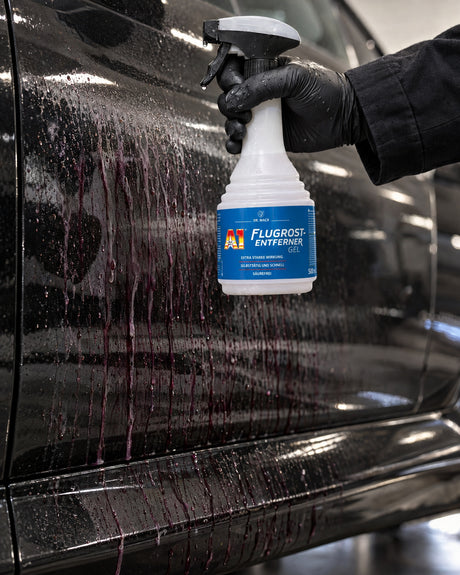
Dates A1 Flugrost-Entferner Gel vun Dr. Wack färgt sech do, wou Bremsstaub ass.


CarPro
"IronX SS" Snow Soap Auto-Shampoo mat Fluchrostentfermer
Vielsiitiges Auto-Shampoo mat Minzduft an engerentferner


CarPro
"IronX Paste" Contaminant Cleaner konzentréierte Flugroustentfermer
Hochwirksamen Flugrostentfermer fir eng déifgeend Reinëm


CarPro
"IronX LS" Lemon Iron-Fillings-Cleaner Flugrouschtfänner
Onvergläichleche Zitrondouft fir eng erfreëlech Anwending
What does an iron fallout remover do? It chemically pulls embedded iron particles from brake dust and rail wear out of paint, glass and wheels. The purple colour change shows you in real time where the iron sits. At Detailing1 you'll find pH-neutral sprays, clinging gels and acidic heavy-duty cleaners.
Iron fallout removers are cleaners with sulphur-based active ingredients that turn foreign iron particles on paint, glass and wheels into a water-soluble compound. The particles come from brake dust, wear on railway tracks and flying sparks; they lodge red-hot in the clear coat and keep rusting there. You see the reaction as a purple to red haze that runs off with the rinse water. They're the chemical part of decontamination before polishing.
Detailing1's tip from the shop: We often get questions about pale hazing and marks left on the wheel after treatment. The cause is almost always the same: the product went onto a warm surface in the sun and dried on before it was rinsed off. Dried-on active ingredient won't rinse off cleanly and leaves exactly the mark you were trying to avoid. Work in the shade, on a wheel that's cool to the touch, and only ever do one wheel or one side of the car at a time. If one pass isn't enough, a second pass is the answer — not a longer dwell time.
Iron fallout isn't your car's own rust — it's foreign iron that has lodged in the surface and keeps corroding there.
The biggest source is on the car itself. Every time you brake, the pad rubs against the cast-iron disc and flings red-hot iron filings outwards. They hit the wheel first, then the lower half of the car, and they arrive hot enough to embed themselves in the soft clear coat instead of bouncing off.
The second source is outside. If you regularly park near railway lines or have your car transported by motorail, you pick up rail wear. This fine metal dust forms where wheel meets rail and settles on everything horizontal. Roof, bonnet and boot lid are then hit much harder than the sides.
Then there are sparks from the neighbourhood: grinding on a building site next to where you park, track works overnight, metalworking firms on the industrial estate. One day in the wrong place is enough to cover a whole side of the car with particles you'll only spot weeks later as orange-brown dots in raking light.
That's because the problem only becomes visible through corrosion. The iron particle oxidises, grows in volume and pushes against the clear coat from the inside. On white and silver paint you'll spot the dots earliest; on dark colours you're more likely to feel them than see them.
One distinction we often have to clear up: a rust spot growing out of a stone chip down to the metal isn't fallout. There, the corrosion comes from below, out of the substrate, and no product in this category can reach it. Spots like that need touching up and sealing, not chemical treatment.
No other care product shows you so directly that it's doing its job. The colour change isn't a side effect of the reaction — it is the reaction.
The active ingredient is thioglycolate, a salt of thioglycolic acid with a free sulphur end. That end grips every ferric iron ion like pliers and pulls it out of the particle into solution. Put simply: what was stuck fast in the clear coat a moment ago is now floating in the film of water on the panel and runs off with it.
The purple to red colour forms in the molecule itself. Sulphur and iron create a complex that swallows green light and so reflects purple back. The more iron the active ingredient finds, the stronger the colour. The tell-tale sign: the colour shows a reaction with iron; whether there's still cleaning to do, you check after rinsing.
The smell comes with it. Thioglycolates smell sulphurous — of exactly the group of chemicals hairdressers use for perms. That's not a fault in the bottle and not a sign the product has gone off; it's the price you pay for how reactive sulphur is. Working outdoors sorts it.
What the colour doesn't tell you is how much iron is really in the paint. Most of the purple running down the wheel comes from loose brake dust on the surface, not from embedded particles. That's why you wash first. Otherwise you burn through expensive active ingredient on dirt that would have come off just as well with shampoo.
And if nothing turns purple at all? Then either the surface really is free of iron, or you sprayed too sparingly. The reaction needs a continuous wet film. A mist that's dry after twenty seconds finds nothing more and shows nothing either.
All products in this category use the same core active ingredient, yet they differ clearly in pH, viscosity and where you use them.
Even pH-neutral iron removers need approval for the specific surface. For paint, glass and coated wheels, check the product instructions and the care guidelines for the surface. The Koch-Chemie Reactive Rust Remover „Rrr" iron fallout remover is by a clear margin our best-seller here, and the GYEON Q²M Iron (REDEFINED) Iron Remover is the pick for cars with a ceramic coating.
Acidic heavy-duty cleaners go a step further and also dissolve the mineral content in sintered brake dust. The SONAX PROFILINE Iron Remover „KraftReiniger Sauer" Iron Remover belongs in this group. Its place is on painted wheels with a short dwell time — not on polished aluminium, not on anodised finishes and not on matte paint.
Thickened gels solve a geometry problem. On a vertical panel, a thin spray runs down in seconds and takes its contact time with it. The TUGA Chemie Flugrost-Teufel® Iron Fallout Remover and the Dr. Wack „A1" Flugrost-Entferner Gel iron remover cling to the surface; with gels, too, the dwell time in the respective product instructions applies.
A fourth type combines two steps. The D-CON „Light" Pre-Cleaner & De-Ironizer Fallout Remover works as pre-cleaner and iron remover in one go, which noticeably shortens your weekend routine. The Meguiars Ultimate Iron Remover — Fallout & Iron Remover and the INNOVACAR „D1" Iron Remover fill the ready-to-use middle ground.
Concentrates hardly play a role here, and there's a factual reason for that. The reaction depends on the concentration of active ingredient in the wet film on the panel. Dilute it and you lose not just speed but often the colour change altogether. That's why almost everything in the range comes ready to use and is sprayed straight from the bottle.
The routine is short, and three points in it decide the result: surface temperature, dwell time and how carefully you rinse.
The wash always comes before the iron remover. Loose road grime, salt and brake dust on the surface bind the active ingredient before it even reaches the embedded particles. Whether the surface should be dry or pre-wetted depends on the product instructions.
Then the surface has to be cool. After a brisk drive a wheel quickly gets to over a hundred degrees, and on a surface like that the wet film evaporates instead of reacting. Cool to the touch means: you can grab the wheel without flinching. The paint belongs in the shade too, not in the midday sun.
Spray it on generously and from the bottom up, so runs don't stray into dry areas and leave marks. Stick to the dwell time in the product instructions and don't let the cleaner dry on. With heavy contamination, a second pass is the clean solution — not doubling the waiting time.
Rinsing decides the rest. Work top to bottom with plenty of water and get into the spots where product collects: wheel arches, gaps between the wheel face and barrel, wheel bolt recesses, edges under trim strips. Residue in these zones keeps working, and that's not where you want it.
Two side notes. Wear gloves and work outdoors — the active ingredient is reactive and smells like it. And allow time: the first time round, four wheels and the lower half of the car take about forty minutes. By the third time it's twenty, because you've got the rhythm of spray, wait and rinse dialled in.
Decontamination means removing everything sitting on and in the paint surface before polish or sealant goes anywhere near it.
The order is fixed and worth memorising: wash, iron remover, tar remover, then the Cleaning clay, dry, and only then Polishing and sealing. Chemical before mechanical, because every particle the chemistry has already dissolved can't end up under the clay. You'll find the full routine under Paint preparation.
Why this has to happen before polishing comes down to one simple thought: an iron particle in the clear coat is harder than any abrasive in your polish. If it gets under the pad, it turns into a cutter and drags a fine trail right across the panel. What you see then isn't a polishing mistake but a skipped decontamination.
Before sealing, the same applies for a different reason. A ceramic or spray sealant closes off the surface and so preserves every iron particle still stuck in it. The rust spot keeps working under the protective layer, and you can't get at it for twelve months.
You do the check by hand. Pull a thin plastic sandwich bag over your fingers and run them over the dry paint — the bag amplifies every bit of roughness. Whatever still feels rough after the chemical round is usually organic: tree sap, bug residue or tar. That's the moment for the clay.
For frequency, a simple rhythm has proven itself: once or twice a year, plus any time a polish or new sealant is due. You don't need it at every wash — the chemistry is too strong and too expensive for that. If you park next to railway tracks, lean towards the shorter interval.
The choice comes down to three questions: are you treating paint or just wheels, does the car have a sealant or coating, and how practised are you at the routine?
For a car that gets fully decontaminated once or twice a year, a ready-to-use pH-neutral spray is the right answer. The Koch-Chemie Reactive Rust Remover „Rrr" iron fallout remover tops our sales for good reason: it works on paint, glass and wheels alike and shows very clearly at the end of the dwell time what it's found.
For wheels with stubborn sintered brake dust, choose by wheel finish and product approval and stick to the stated dwell time. For the regular in-between session, pick a Rim cleaner to suit the dirt and the wheel approval; effect and how often you use it depend on the specific product.
If your car has a ceramic coating, check the coating's care guidelines and the approval of the specific iron remover. The GYEON Q²M Iron (REDEFINED) Iron Remover is designed for it and doesn't attack the layer. Choose your cleaner by these approvals rather than by its pH alone.
If you're less practised or mainly treating vertical surfaces, a gel makes life easier. The TUGA Chemie Flugrost-Teufel® Iron Fallout Remover stays put on the panel; here too, stick to the dwell time in the product instructions and don't let the cleaner dry on. Contact time that doesn't run off is contact time that works.
And if you're after the bigger picture: every cleaning stage from pre-wash to specialist cleaner is under Cleaning, the full route from decontaminated to polish-ready paint under Paint preparation. Removing fallout is the first step there — and the only one you can't make up for by putting in more effort somewhere else.
Zu viel Auswahl? Lass dir bei Rust remover helfen:
Detailing1 bei Google als bevorzugte Quelle hinzufügen
Daniel von Detailing1 |

Daniel von Detailing1 |

Daniel von Detailing1 |

Daniel von Detailing1 |

Daniel von Detailing1 |

Daniel von Detailing1 |


Daniel von Detailing1 |

Daniel von Detailing1 |

Daniel von Detailing1 |

Daniel von Detailing1 |

Daniel von Detailing1 |