Frozen car door: how to open it without tearing the seal
Daniel von Detailing1 |


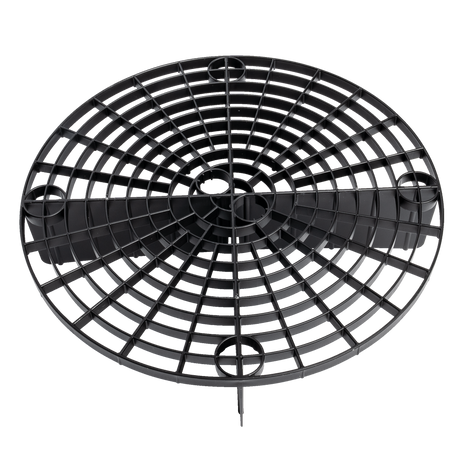

Koch-Chemie
Detailing Bucket "Grit Guard" Schmutzsiww fir Wäsch-Eimer
Schmutzsiww-Insaz fir krazelfreie Zwei-Eimer-Wosch


YETI
Bucket Caddy / Insaz fir "LoadOut® Eimer"
Organiséiert Är Auto-Pfleg mat dësem robuste Insaz


Mitt-Slide
"Grit Guard + Board" Wäscheemmer-Insaz
Innovativ Insaz trennt Schmutz a Dreck tëscht Eimer a Waasser

Meguiars
PROFESSIONAL Grit Guard Schmutzsiww
Schmutzsiwwen géint Wirbelkratzer beim Faarfouwwesch
Koch-Chemie
Detailing Bucket "Washboard" Insaz fir Wäscheemmer
What are bucket inserts? Parts for your wash bucket that either separate dirt from the wash mitt or organise your tools: the grit guard on the bottom, the washboard on the side, guard and board in one piece, and the caddy for bottles and brushes. What matters is that the insert fits the bucket.
Bucket inserts are plastic parts for the wash bucket you use for hand-washing a car. Most of them work in the water: a grit guard is a plastic grid on the bucket floor that keeps settled grit trapped underneath, and a washboard gives the mitt a rubbing surface on the bucket wall. The caddy works above the water and keeps your tools organised. Every insert is tied to a bucket shape, so choosing one starts with the bucket.
Detailing1's tip from the shop: We've seen this case day-to-day: an insert didn't reach the bottom of the bucket. It only sat properly once the customer had pushed it all the way down with some force. Before that, he hadn't dared, worried about his bucket. Press every grit guard and every board firmly down to the bottom after putting it in, fill the bucket and check that it stays put. Only once it no longer lifts in the full bucket does the mitt go in.
A bucket insert has one of two jobs: in the water, it separates dirt from the wash mitt; above the water, it organises tools you need within reach during the wash.
The first group goes back to an idea filed as a US patent application in 2002. The problem was stated right in the application: the mitt doesn't get properly clean in the rinse water, and the dirt ends up back on the car. The answer was a grid of crossing ribs standing on baffles above the bucket floor. The product was called Grit Guard, and today several manufacturers sell their grit guards under that name.
The baffles are the real trick. Meguiar's and other suppliers describe the base as four separate chambers that slow down the water movement under the grid. In plain terms: the water moves less down below than up top, where your mitt is moving. For you, that means grit that has dropped through the grid stays at the bottom the next time you dip in, instead of ending up back in the fibres.
Why grit sinks in the first place, and what a grit guard won't hold back, is covered on the Wash buckets page. Here we go one level deeper: which design separates how, and which bucket it fits. The bigger picture with buckets, lids and bags is under Wash buckets & accessories.
The second group has nothing to do with dirt. A caddy sits just below the bucket rim and holds spray bottles, brushes and towels in compartments. It belongs in a bucket that serves as a tool carrier, not in the rinse bucket. That split sounds trivial, and it explains why this category contains parts that don't seem to have much in common at first glance.
Three designs separate dirt from the mitt: the flat bottom guard, the upright washboard on the bucket wall, and the combination of guard and angled board in a single piece.
The flat bottom guard is the basic form. It sits on the bucket floor on its base, and the ribbed top serves as a rubbing surface for the mitt. The Meguiars PROFESSIONAL Grit Guard Schmutzsieb is this type, as is the grit guard from the Koch-Chemie Detailing Bucket system. Its advantage is simplicity: one part, put in and taken out without tools.
The washboard stands upright in the bucket and gives the mitt a rubbing surface on the wall, instead of sending it all the way to the bottom. In the original Grit Guard system, it hooks onto the bottom guard. Koch-Chemie explicitly recommends the Koch-Chemie Detailing Bucket "Washboard" Einsatz für Wascheimer as an add-on to the grit guard, to pull more dirt particles out of mitts and sponges. Bucket and grit guard aren't included.
The Mitt-Slide "Grit Guard + Board" Wascheimer-Einsatz combines both. A perforated, double-curved board runs from the bottom up the bucket wall at an angle, and the mitt slides along it. Your hand stays higher up in the bucket. Retailers and forum users name exactly that as the advantage with a deep 20-litre bucket, because you no longer have to reach all the way down.
Each design calls for its own technique. With the bottom guard, you dip in and rub the mitt out down below; with the washboard and the board, you wipe the mitt off at half height. If you use the board like a bottom guard and still push the mitt all the way down, you throw away the one advantage you bought it for.
A bucket insert only works if it sits firmly in the bucket, so pin down your bucket system first and then look for the insert built for exactly that shape.
Grit guards for round buckets follow the American gallon sizing. Meguiar's quotes around 25.7 cm diameter and 6.4 cm height for its Grit Guard, suitable for most buckets of 3.5 to 5 US gallons. For the Meguiars PROFESSIONAL Grit Guard, we list buckets with a 26 to 32 cm diameter. Other retailers give yet other bucket sizes for grit guards. There's no universal size that fits every bucket.
Lots of DIY-store buckets taper towards the bottom. The guard then gets stuck halfway down or floats up in the full bucket. That exact question came up on German car care forums as early as 2008, and the fixes range from cable ties at the rim to swapping the bucket. A small gap to the floor is considered acceptable there. A guard that sits loose and wobbles, on the other hand, lets the dirt circulate.
With system buckets, the question is simpler. On the Koch-Chemie Detailing Bucket, the grit guard, washboard and click lid are matched to exactly this bucket. The Bucket Caddy only fits the YETI LoadOut bucket. If you own one of these buckets, buy within the same system and you won't need to measure.
With the Mitt-Slide, it's worth checking the bucket rim. Retailers list it for common buckets of 3 to 5 US gallons. Users report that it won't go through the opening if a screw-lid ring has been pressed onto the bucket, because the ring narrows the opening. So choose the lid to suit the insert, not the other way round. Which lids fit which bucket is under Bucket lids.
A grit guard only keeps the grit down if you work calmly: dip the mitt, rub it out over the grid with light pressure and squeeze it out, without slamming it hard onto the bottom.
Hard plunging forces water down through the grid and from there back up again. A demonstration with red test particles shows particles that were already at the bottom rising back through the grid into the water. It comes from a supplier of a different type of insert and isn't an independent test. Even so, on an English detailing forum, one user reports a striking amount of dirt in the water above the flat guard after two washes in a row.
The German scene has the counter-argument to scrubbing: the guard is a grit guard, not a washboard, and hard rubbing strains your hand and the mitt and kicks up light particles. Both fit together, as long as the pressure stays light. Pull the mitt calmly over the top a few times, squeeze it out and lift it slowly. For more vigorous wiping off, that's what the washboard is for.
With the washboard, you work on the wall. You wipe the mitt off from top to bottom, and the loosened dirt drops towards the guard and stays there. One forum user also reports that a guard with a washboard hooked in no longer rides up when you wipe off, because the board holds it down. With round buckets that have a bit of play, that's another reason for the combination.
After the wash, the insert comes out. Sludge collects under the grid, and users report a surprising amount of sediment after winter washes. Rinse it out, let it dry, then back into the bucket. With the Mitt-Slide, you lift it by the grip recess; with the bottom guard, by the rim. An insert with sludge left on it carries the grit from the last wash straight into the next one.
Our bucket inserts are organised by bucket: the Meguiars guard and the Mitt-Slide for round gallon buckets, the washboard for the Koch-Chemie Detailing Bucket and the caddy for the YETI LoadOut.
The Meguiars PROFESSIONAL Grit Guard is the classic bottom guard. According to the manufacturer, its vanes keep the particles at the bottom of the bucket, and it goes in and comes out without tools. It lets you retrofit an existing round bucket, as long as the diameter is right. Choose the bucket to go with it under Wash buckets.
The Mitt-Slide is the pick if reaching down to the bottom of the bucket bugs you. It comes in black, blue and orange. One colour per bucket makes it obvious at a glance which is the shampoo bucket and which is the rinse bucket. That's our suggestion, not a manufacturer claim. If you run two buckets, you'll see straight away which insert goes in which water.
For the Koch-Chemie Detailing Bucket, the washboard is the add-on to the grit guard. If you don't have the bucket yet, start with the Koch-Chemie Detailing Bucket Set (Wascheimer, Deckel und Schmutzsieb). The bucket, click lid and Grit Guard in it are made to work together, and the washboard can be added if you need it.
The YETI Bucket Caddy / Einsatz für "LoadOut® Eimer" is the special case. It has three compartments made of tough polymer and a retractable carry handle, and according to the product details it can be combined with the LoadOut lid. That turns the bucket into a tool carrier for spray bottles, brushes and towels. It doesn't belong in the wash water. If you'd rather carry tools on the outside of the bucket, take a look under Bucket bags.
The choice follows the bucket and the job: a grit guard in every bucket a mitt goes into, a washboard on top in the rinse bucket if needed, and the caddy for tools.
If you work with two round gallon-size buckets, put a bottom guard in both and check the diameter first. If you use the Koch-Chemie Detailing Bucket, stay in the system and add the washboard to the rinse bucket. If reaching down to the bottom is hard for you, the Mitt-Slide is the better choice. If you use the YETI LoadOut as a tool bucket, the caddy turns it into a tray.
An insert doesn't replace a pre-wash. Heavy dirt needs to come off with foam and water before the mitt touches the paint; otherwise it drags it across the panel on the first pass, long before it ever sees a bucket. With a touchless foam wash, the guard has nothing to do, because nothing gets rubbed out. And when the rinse bucket turns murky, change the water, whichever guard is sitting in it.
Wheels and wheel arches stay a world of their own. Brake dust and dirt from the wheels call for their own tools and their own water; a guard in the paint bucket doesn't change that. Our guide Die Zwei-Eimer-Methode describes the full two-bucket process, and the matching mitts are under Wash mitts.
In the end, no accessory on its own prevents swirls, the fine circular scratches in the clear coat; fit and technique do. A guard that sits firmly on the bottom and is used calmly keeps the grit down. The same guard, loose in the wrong bucket and worked hard, puts it back into the mitt. That's why you check the insert once in the full bucket before you get to the first door. That one look matters more than the brand on the grid.
Zu viel Auswahl? Lass dir bei Eemerkéifsel helfen:
Detailing1 bei Google als bevorzugte Quelle hinzufügenEn Grit Guard ass en Schmutzsiieb aus Plastik, dat un an der Ëmmerbode läit. Seng Gitter steet op en Unterbau aus Stangen, deen d'Wasser drënner beruhgt, fir datt abgfonnen Sand drënner bleift. D'Obersäit dient als Reibfläch fir de Wäschhandschong. D'Prinzip geet op eng US-Patentanmeldung vun 2002 zréck, de Produktnamen Grit Guard steet haut fir Siie vun verschiddene Produzenten.
Beides, märeem Ëngemmen. Taucht de Handschong ënnen, zéiecht en mat liichtem Drock iwwer d'Gitteroberfläch an dréckt en aus. Kräfteg Schtampen oder Schrubben dréckt Wasser duerch d'Gitter an kann abgesetzte Partikelen erëm ufwirbelen. Wer de Handschong méi staark ofschléierfenk wëll, benotzt dofir en Washboard un der Ëmmerwand anstatt méi Drock un der Bode.
De Schmutzsiieb läit un der Bode an hält abgfonnenen Sand unner dem Gitter. De Washboard steet senkrecht un der Ëmmerwand an dient fir d'Ofschléieren vum Handschong, Koch-Chemie empfielt en als Ergänzung zum Siieb. De Caddy sitzt knapp unner dem Ëmmerrand an ordnet Werkzeug an Fächeren. En Wäschfunktioun huet en net, en geert net an d'Spülwasser.
Dat hänkt vum Siieb of, en Universellméi gëtt et net. Meguiar's nennt fir seng Grit Guard en Ëmmerschtëmm vu 25,7 cm, passend fir déi meescht Ëmmer mat 3,5 bis 5 US-Gallonen. Fir de Meguiars PROFESSIONAL Grit Guard Schmutzsiieb ginn mir Ëmmer mat 26 bis 32 cm Ëmmerschtëmm un. Baumarkteemmer, déi no ënnen schmaller ginn, passen oft net.
Zuerst mat festem Drock ganz no ënnen schéien, och wann et sech ongewont kräftig fëlt. Bleift de Insaz no ëm voll Ëmmer ruhig läien, passt en, en kléinen Spalt zum Bode ass dobäi tragbar. Wandert en weider oder schwimmt op, passt en net zur Ëmmerform, meescht bei Ëmmer, déi no ënnen schmaller ginn. Dann hëlleft en Insaz aus demselwecht Ëmmer-System.
Jo, en Siieb geert an ënnen Ëmmer, an deen en Handschong ënnen gëtt: an de Spüleëmmer, fir datt ausgewaschenen Sand unner bleift, an an de Shampoo-Ëmmer, fir datt Partikelen, déi trotzdem ënnen kommen, net zréck un de Handschong kommen. En Washboard lohnt sech zousätzlech am Spüleëmmer. De Ablauf ass an eisem Ratgeber zur Zwei-Ëmmer-Methode erkläert.
Daniel von Detailing1 |

Daniel von Detailing1 |

Daniel von Detailing1 |

Daniel von Detailing1 |

Daniel von Detailing1 |

Daniel von Detailing1 |

Daniel von Detailing1 |

Daniel von Detailing1 |

Daniel von Detailing1 |

Daniel von Detailing1 |

Daniel von Detailing1 |

Daniel von Detailing1 |