

Cargando...
19,97€
Contenido: 1000mlPrecio unitario (19,97€
/ l)
Agotado
IVA incluido: 3,33€ (20%), más envío, se calcula al momento de pagar
GYEON Q²M TireCleaner Limpiador de neumáticos - 1000 ml / 1 liter está agotado y se enviará tan pronto como vuelva a estar disponible.
0 disponibles
— Agotado por ahora
Se ha añadido el artículo al carrito
Ver carrito
Formas de pago aceptadas
Schnellbestellung
| GYEONQ²M TireCleaner Limpiador de neumáticos 1000 ml / 1 liter |
19,97€
Contenido: 1000mlPrecio unitario (19,97€
/ l)
Agotado
|
Ausverkauft | |
| GYEONQ²M TireCleaner Limpiador de neumáticos 500ml |
12,20€
Contenido: 500mlPrecio unitario (24,40€
/ l)
Agotado
|
Ausverkauft | |
| GYEONQ²M TireCleaner Limpiador de neumáticos 4 liters |
53,24€
Contenido: 4000mlPrecio unitario (13,31€
/ l)
Agotado
|
Ausverkauft |
Limpieza alcalina a fondo del flanco del neumático antes del coating
Limpieza alcalina a fondo del flanco del neumático antes del coating
Preguntas y ayuda
Preguntas y ayuda
¿Tienes dudas o necesitas ayuda?
Estamos seguros de que nuestra página de ayuda te servirá. Allí encontrarás cómo contactarnos y las respuestas a las preguntas más frecuentes.
¿No lo has encontrado? Escríbenos un mensaje en el chat.
Envío y entrega
Envío y entrega
Envío internacional rápido a tu país con FedEx, DPD o tu servicio postal nacional, plazo de entrega 1-4 días. Los precios incluyen el IVA de tu país.
Todos los métodos de envío, tarifas y tramos de peso están en nuestra política de envío.
Recogida en tienda
Recogida en tienda
Tienda de cuidado del coche en Nordhorn
¿Para qué esperar si puede ser rápido? Pide tus productos de cuidado del coche online y elige la recogida cómoda o nuestra entrega exprés, en local o en toda Europa. Lo tenemos todo pensado para darte la máxima flexibilidad y comodidad, para que tu coche esté siempre en plena forma.
Puedes recoger tu pedido siempre de martes a viernes de 10:00 a 17:00 en Bosinks Kamp 8, 48531 Nordhorn, en Detailing1. Ten a mano tu confirmación de recogida. ¡Te esperamos!
No se ha podido cargar la disponibilidad de recogida
Despegar viejos dressings y antiozonantes de la goma
¿Qué es el GYEON Q²M TireCleaner? Un limpiador de neumáticos alcalino que despega viejos dressings, mugre de la carretera y antiozonantes exudados del flanco de goma y deja el neumático listo para una nueva cura o un tyre coating. No para llantas de aluminio, superficies pintadas ni para solo ennegrecer sin dressing después.
GYEON Q²M TireCleaner es un limpiador de neumáticos alcalino de GYEON que despega químicamente la protección de goma exudada y las viejas capas de cura del flanco poroso. La fórmula alcalina (pH en torno a 12) rompe los aceites de silicona y las ceras de los dressings habituales y disuelve al mismo tiempo los antiozonantes pardo-amarillos que la goma exuda a la superficie como protección UV.
Lo que te queda es una base sin residuos donde un dressing o un tyre coating como el GYEON Q² TireExpress agarra de forma uniforme — sin velos, sin manchas y sin que la nueva cura se vuelva a despegar a los pocos días.

- Disuelve la exudación parda en vez de taparla. El velo amarillo-pardo de los neumáticos descuidados no es mugre, es antiozonante — una cera que la goma exuda para protegerse de los UV. Un dressing solo tapa esa capa y se despega con ella. El TireCleaner la saca químicamente, para que tu siguiente dressing se asiente de verdad sobre la goma.
- La limpieza a fondo antes de cada tyre coating. Cada fabricante de tyre coating da por hecho que el flanco está sin residuos. Los aceites de silicona de dressings baratos y la suciedad de carretera endurecida bloquean el enlace covalente de las moléculas del coating. Sin una preparación limpia, un coating de dos cifras dura unas semanas en vez de los meses prometidos.
- Vale para todas las gomas de neumático habituales. Verano, invierno, todo tiempo, SUV, moto — mientras sea goma negra, aguanta el TireCleaner. No vale para: neumáticos de banda blanca, llantas pintadas en la zona de salpicadura, pasos de rueda de plástico justo en la línea de tiro. Cúbrelos antes o neutraliza al momento.
Lo que vemos en el día a día: siempre ANTES del limpiador de llantas. Si haces la llanta primero, el limpiador de llantas escurre sobre el neumático — y te neutraliza parte de la acción alcalina. El orden: prelimpiar los neumáticos, limpiar las llantas, aclararlo todo junto, secar, y solo después dar dressing o coating. Trabaja sobre un neumático templado, nunca a pleno sol — si no, el producto se seca y deja regueros que solo quitas con una segunda pasada.
Neumático seco. 60 segundos. Cepillo para rematar.
Pulveriza el TireCleaner sobre el neumático seco y templado — generoso, hasta que el flanco esté visiblemente mojado y el producto haga algo de espuma. Esa espuma es normal y te indica que la reacción alcalina con los tensioactivos y los viejos restos de cura ha arrancado.
Tras alrededor de un minuto de actuación, un cepillo de neumáticos se encarga del trabajo mecánico. Trabaja en movimientos circulares por todo el flanco, incluida la zona estrecha entre neumático y pestaña de la llanta — ahí es donde más se incrusta la suciedad endurecida. La química por sí sola despega la película de superficie; el cepillo saca el material suelto de los poros de la goma, donde los antiozonantes se han ido depositando durante varios meses.
Después aclara con un chorro de agua fuerte hasta que el agua salga limpia. Deja escurrir el neumático 2 o 3 minutos — solo cuando el flanco se vea gris oscuro mate en vez de brillante-mojado está la superficie lista para tu dressing o coating. Brillante-mojado significa agua estancada en los poros, y eso te diluye después cualquier dressing.
Un fallo habitual: tiempos de actuación más largos no limpian más a fondo. Tras 1 o 2 minutos aproximadamente la reacción ha terminado, a partir de ahí el producto solo se seca. Si un neumático está muy descuidado, una segunda pasada corta siempre gana a una primera larga — igual que con el limpiador de llantas.

Dressings y antiozonantes los despega. El alquitrán no.
Las curas de neumático con aceite de silicona, los dressings cerosos y los antiozonantes exudados son el terreno del TireCleaner — aquí trabaja fiable y sin residuos. El pH alcalino rompe los enlaces entre el aceite de cura y la goma sin volver quebradiza la goma en sí. Esa es la diferencia clave frente a los limpiadores con disolvente, que también despegan dressings, pero de paso sacan los plastificantes de la goma.
Como segundo uso, el TireCleaner también se ha ganado su sitio en el día a día en pasos de rueda de plástico donde quedan viejos velos de dressing. Un pulverizado rápido, lo trabajas con un cepillo blando, aclaras al momento — y el plástico vuelve a admitir después un dressing de plástico limpiamente. Importante: en plástico deja actuar solo unos segundos, no minutos.
Donde el TireCleaner no es el producto adecuado: alquitrán reseco, salpicaduras de betún y restos de asfalto no reaccionan con los álcalis. Para eso necesitas un tar remover con base disolvente, que aplicas de forma localizada y no por todo el neumático. Los neumáticos de banda blanca también están vetados — la mezcla blanca reacciona a los limpiadores alcalinos con un amarilleo que ya no se revierte.
Si buscas solo ennegrecer sin cura después, también te equivocas. Un TireCleaner limpia — no da dressing. Tras la limpieza el neumático se ve mate y algo grisáceo, porque la capa de cura disuelta se ha ido. Es lo buscado, pero es solo el primer paso. Si quieres seguridad y durabilidad a largo plazo, combina TireCleaner y un tyre coating. Si quieres brillo negro rápido y no piensas coatar a largo plazo, basta con un dressing de neumáticos sencillo tras la limpieza.

La limpieza a fondo antes del coating
El TireCleaner no es un producto de cura de fin de semana, es una limpieza a fondo. Lo coges cuando un neumático lleva mucho descuidado, cuando montas un nuevo sistema de dressing o cuando quieres aplicar un tyre coating como el GYEON Q² TireExpress. Para el lavado normal del coche cada dos semanas, con un champú estándar más un dressing fresco vas sobrado.
Donde más brilla es como preparación para un tyre coating. Cualquier coating solo agarra de forma fiable si el flanco de goma está abierto. El aceite de silicona de productos anteriores sella los poros y bloquea el enlace covalente. El TireCleaner abre esa capa químicamente y deja el neumático apto para coating. Mucha gente se salta este paso y luego no entiende por qué un coating caro ha desaparecido a las 3 semanas en vez de los 12 meses prometidos.
Como solución completa combinas el TireCleaner con un cuidado de neumáticos o un tyre coating. La secuencia limpia es: limpiar a fondo los neumáticos con TireCleaner, tratar las llantas aparte con un limpiador de llantas, lavar el coche, secarlo con gamuza, y luego aplicar dressing o coating. Con un coating, cuenta 24 horas de curado antes de volver a la carretera — si no, despegas la capa aún sin curar en la primera lluvia.
Para el bolsillo la cuenta sale así: un bote de 500 ml de TireCleaner da para unas 80 a 120 limpiezas a fondo de neumático según el ancho. Con 4 neumáticos por coche, son 20 a 30 limpiezas a fondo por coche. Si limpias a fondo tu coche 2 veces al año y el resto lo cuidas normal, un bote te dura varios años — o cubre una temporada de 6 meses con más o menos un coche por semana.

Por qué el GYEON Q²M TireCleaner es nuestro estándar
En Detailing1 hemos tenido varios limpiadores de neumáticos alcalinos en uso a la vez — de Koch Chemie, Sonax y GYEON. El Q²M TireCleaner resultó el compromiso más fiable entre poder de limpieza, tolerancia de la goma y rendimiento. La fórmula es lo bastante agresiva para despegar antiozonantes exudados en una pasada, pero no tanto como para endurecer la goma para siempre.
Sobre todo los clientes que vienen del mundo coating de GYEON valoran la coherencia del sistema. El TireCleaner forma parte de un sistema de neumáticos GYEON pensado en conjunto — limpiador de fondo, dressing y coating — los tres productos trabajan juntos químicamente y no dejan incompatibilidades, como las que salen más a menudo al mezclar marcas. Quien aplica el Q² TireExpress o el Q²M TireBlack consigue la mejor adherencia con el TireCleaner como preparación.
El fallo de usuario más habitual que vemos: el TireCleaner usado a pleno sol o sobre neumáticos calientes tras un tramo de autopista. Ambas cosas reducen el efecto drásticamente, porque el producto se seca antes de poder reaccionar. El neumático TIENE que estar templado o más frío. Si quieres limpiar justo después de un viaje largo, espera al menos 30 minutos o enfría los neumáticos con agua antes de coger el TireCleaner.
Cuando lo interiorizas una vez — neumático frío, actuación corta, cepillo de apoyo, segunda pasada con suciedad fuerte — trabajas más limpio para siempre y a la vez alargas la duración de cada dressing y coating que aplicas después. El TireCleaner no es un producto de belleza, es un cimiento. Todo lo que viene después dura tanto como estuviera de limpia la base.
¿Dudas sobre GYEON Q²M TireCleaner Limpiador de neumáticos? Pide una explicación:
Añadir Detailing1 como fuente preferida en GoogleFrequently Asked Questions about GYEON Q²M TireCleaner
What is GYEON Q²M TireCleaner?
GYEON Q²M TireCleaner is an alkaline tire cleaner from the GYEON Q²M maintenance line. Its formula breaks down silicone oil and wax components from old dressings and dissolves the brownish-yellow antiozonants that the rubber sweats to the surface for UV protection. The result is a coating-ready sidewall—the foundation for any dressing and any tire coating like the GYEON Q² TireExpress.
How is TireCleaner applied?
Spray generously onto dry, lukewarm tires until the sidewall is visibly wet. Allow to dwell for about 1 minute, then work in with a stiff tire brush in circular motions—including the area between the tire and the rim flange. Rinse off with a strong stream of water and allow to drip dry for 2 to 3 minutes. Only when the sidewall looks matte dark grey instead of glossy wet is it ready for dressing or coating.
What is the difference from an all-purpose cleaner?
An all-purpose cleaner is formulated for painted surfaces and leaves rubber-specific residues untouched. Caked-on silicone dressings and migrated antiozonants sit deep in the rubber pores—they can only be removed with an alkaline formula that works on rubber without making the mixture brittle. For a tire without a dressing history, APC is sufficient. However, if silicone-based tire care has been used, you won't be able to remove the separating film without TireCleaner.
Is TireCleaner compatible with all tire and paint surfaces?
Suitable for black tire rubber—summer, winter, all-season, SUV, motorcycle. Not suitable for white wall tires, painted aluminum rims, or rubber seals with prolonged exposure. The alkaline pH value can dissolve clear coat and irreversibly yellow white tire compounds. If the product gets on the rim or paint, rinse immediately with water. Order of application in practice: first tires, then rim cleaner, rinse everything together.
What is the most common mistake when applying?
TireCleaner is often used in direct sunlight or on hot tires after a highway drive. Both drastically reduce its effectiveness because the product dries before it can react—resulting in visible streaks and white edges. The tire must be dry and lukewarm. After highway drives, wait at least 30 minutes or cool the tires with water before using TireCleaner.
How economical is TireCleaner and how often should it be applied?
A 500 ml bottle is sufficient for approximately 80 to 120 tire basic cleanings, depending on tire width—which means about 20 to 30 vehicles. TireCleaner is not a weekly product, but a basic cleaning: 2 to 4 applications per year are sufficient—at seasonal changes, before a tire coating, and when the sidewall visibly turns brown. In between, use shampoo plus fresh dressing. Shelf-stable for 24 months unopened.
Pregúntanos. Daniel te ayuda.
Application of GYEON Q²M TireCleaner
Basic Cleaning before Dressing and Coating
Spray the TireCleaner undiluted onto the dry, lukewarm tire — generously, until the entire sidewall is visibly wetted and the product slightly foams. Wet tires dilute the formula and weaken the reaction; hot tires after highway driving will cause the product to dry before it can take effect. After driving, wait at least 30 minutes or cool the tires with water.
After about 1 minute of dwell time, a stiff tire brush performs the mechanical work. Work in circular motions over the entire sidewall, including the narrow zone between the tire and the rim flange — this is where most of the ingrained dirt is located. The chemicals dissolve the surface film, and the brush removes residues from the rubber pores. Longer dwell time does not lead to deeper cleaning, because the reaction is complete after 1 to 2 minutes.
Rinse thoroughly with a strong jet of water from top to bottom until the water runs clear. Then let it drip dry for 2 to 3 minutes — only when the sidewall looks matte dark grey instead of glossy wet is the surface ready for absorption. For heavily neglected tires, a second short pass is always more effective than an extended dwell time on the first. Finally, apply a dressing or a tire coating such as the GYEON Q² TireExpress.
Order in practice: first, thoroughly clean the tires with TireCleaner, then clean the rims separately, wash the vehicle, dry it — and only then dress or coat. If you clean the rim first, rim cleaner will run over the tire and neutralize part of the alkaline effect. For coating, allow 24 hours for curing before the vehicle is exposed to rain again.
Notes: TireCleaner does not react with baked-on tar or bitumen — for this, you need a solvent-based tar remover that you spray locally, not over the entire tire. Whitewall tires are a no-go; the white compound will irreversibly yellow with alkaline cleaners. Do not work in direct sunlight or at temperatures above 25 °C, otherwise the product will dry and leave streaks. Wear protective gloves and eye protection; in case of skin or eye contact, rinse with clear water. Store in a dark, frost-free place between 5 and 25 °C, unopened shelf life of at least 24 months. Store spray bottle with the head facing upwards to prevent the pump mechanism from clogging.
Información de seguridad de GYEON Q²M TireCleaner Limpiador de neumáticos
Apto para particulares
Este producto, marcado como «Apto para particulares», está envasado, declarado, registrado y certificado para particulares conforme a la legislación alemana. Respeta las indicaciones de peligro y los consejos de prudencia.
Peligro

Corrosivo
| Puede ser corrosivo para los metales. | H290 |
| Provoca quemaduras graves en la piel y lesiones oculares graves. | H314 |
| Si se necesita consejo médico, tener a mano el envase o la etiqueta. | P101 |
| Mantener fuera del alcance de los niños. | P102 |
| No respirar el polvo/el humo/el gas/la niebla/los vapores/el aerosol. | P260 |
| Llevar guantes/ropa de protección/equipo de protección para los ojos/la cara. | P280 |
| EN CASO DE CONTACTO CON LA PIEL (o el pelo): Quitar inmediatamente toda la ropa contaminada. Enjuagar la piel con agua [o ducharse]. | P303+P361+P353 |
| EN CASO DE CONTACTO CON LOS OJOS: Enjuagar con agua cuidadosamente durante varios minutos. Quitar las lentes de contacto cuando estén presentes y pueda hacerse con facilidad. Proseguir con el lavado. | P305+P351+P338 |
Descargas
Descargar la ficha de datos de seguridad
Esta información del producto solo pretende asesorarte sin compromiso. De ella no se deriva ninguna responsabilidad por nuestra parte. Comprueba si el producto es adecuado para tu aplicación. Antes de usarlo, comprueba su idoneidad y compatibilidad. Estaremos encantados de asesorarte.
¿Preguntas sobre esta información?
Más sobre GYEON
Más sobre GYEON
Contacto
Gyeon Deutschland GmbH
Vietorstr. 87, 51103 Köln, Deutschland
+4922128585880
info@gyeon.de
gyeon.de
Especificaciones
Especificaciones
Ausführung
-
Inhalt1 liter
-
ArtikelnummerD1-GYEON-Q2MTC1000
-
EAN8809432674726
-
HerstellernummerQ2MTC1000
-
Gewicht1 kg
Eigenschaften
-
Einsatzbereich am FahrzeugRäder
Produkt
-
Hersteller
-
ProdukttypLimpiador de neumáticos
-
Kategorie
Garantía legal
Garantía legal
Pago y envío
💳 Pago seguro
Elige entre muchos métodos de pago como PayPal, Klarna, Apple Pay, Mastercard o Visa y aprovecha el pago aplazado o a plazos. Tus datos de pago se procesan siempre de forma segura. ¿Preguntas sobre el pago?
📦 Envío rápido
Tu pedido te llega en 1-4 días con FedEx, DPD o tu servicio postal nacional. Los precios incluyen el IVA de tu país. ¿Preguntas sobre el envío?
Relacionado en la guía
Ver todos

Descubre GYEON
Ver todos-
 New
NewGYEON
Cepillo para cuero Q²M LeatherBrush
5,54€Contenido: 1 unidadPrecio unitario (5,54€ / unidad)Agotado -


GYEON
Q²M WetCoat sellador en húmedo
GYEON Q²M WetCoat: sellador SiO₂ en húmedo justo después del lavado
Poca disponibilidad (3× 1000 ml / 1 liter · 2× 500ml · 1× 4 liters)Desde 18,85€Contenido: 500mlPrecio unitario (37,70€ / l)Agotado -


GYEON
Q²M TireApplicator aplicador de neumáticos para el cuidado
Muy poca disponibilidad (2× Large (60x100 mm) / 2 pieces)Desde 6,66€Contenido: 2 unidadesPrecio unitario (3,33€ / unidad)Agotado -

GYEON
Q²M TireBrush cepillo para neumáticos
Disponibles (13 unidades)4,44€Contenido: 1 unidadPrecio unitario (4,44€ / unidad)Agotado -


GYEON
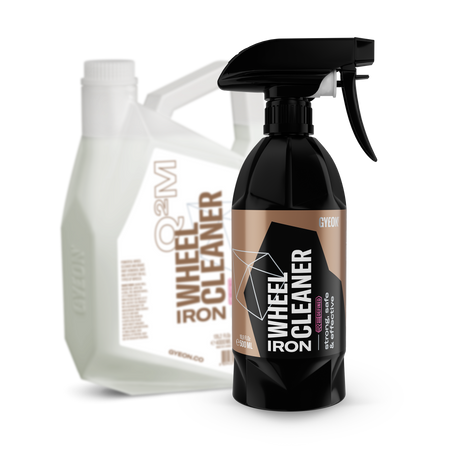
Q²M Iron WheelCleaner (REDEFINED) Limpiallantas
Limpiallantas reactivo: disuelve químicamente polvo de freno y óxido
Poca disponibilidad (1× 1000 ml / 1 liter · 3× 500ml)Desde 15,53€Contenido: 500mlPrecio unitario (31,06€ / l)Agotado -


GYEON
Q²M Prep Desengrasante a Base de Alcohol
Desengrasante IPA: preparación final sin residuos antes del coating
Disponibles (4× 1000 ml / 1 liter · 6× 500ml)Desde 17,75€Contenido: 500mlPrecio unitario (35,50€ / l)Agotado -


GYEON
Quitainsectos: disuelve insectos resecos sin rayar
Poca disponibilidad (2× 1000 ml / 1 liter · 2× 500ml)Desde 14,42€Contenido: 500mlPrecio unitario (28,84€ / l)Agotado -


GYEON
Quitamanchas de cal ácido con aceite portador para coatings cerámicos
Desde 16,64€Contenido: 500mlPrecio unitario (33,28€ / l)Agotado -

 New
NewGYEON
Q²M SilkDryer EVO "Twisted Loop" toalla de secado (530 GSM)
Muy poca disponibilidad (2× 1 piece / 50x55 cm / Blue / GYEON-BLUE)Desde 24,41€Contenido: 1 unidadPrecio unitario (24,41€ / unidad)Agotado -


GYEON
Champú pH-neutral para coches con coating o cera
Muy poca disponibilidad (1× 1000 ml / 1 liter)Desde 17,75€Contenido: 500mlPrecio unitario (35,50€ / l)Agotado -


GYEON
Q²M Glass+ (Plus) limpiacristales con sealant
Limpiacristales con sellador: limpia y protege en un paso
Muy poca disponibilidad (1× 1000 ml / 1 liter · 2× 500ml)Desde 19,97€Contenido: 500mlPrecio unitario (39,94€ / l)Agotado -


GYEON
Q²M TireCleaner Limpiador de neumáticos
Limpieza alcalina a fondo del flanco del neumático antes del coating
Desde 12,20€Contenido: 500mlPrecio unitario (24,40€ / l)Agotado


Detailing101
Ver todos-

Sellador de pintura o cera: 5 casos que deciden antes del invierno
Daniel von Detailing1 |
-

Lavar y cuidar bien la pintura mate y el vinilo mate
Daniel von Detailing1 |
-

Quitar resina seca de la pintura del coche: primero disolver, luego sellar
Daniel von Detailing1 |
-

Manchas de agua secas en el coche: ¿ácido o pulido?
Daniel von Detailing1 |
-

Quitar pegatinas del coche: el gesto que evita los restos de pegamento
Daniel von Detailing1 |
-

Clay bar en el coche: cuándo la necesita la pintura antes del invierno
Daniel von Detailing1 |
-

Secar el coche: 5 mitos que dejan manchas de agua en la pintura
Daniel von Detailing1 |
-

Cómo guardar los neumáticos: por qué la llanta tiene que estar limpia antes
Daniel von Detailing1 |
-

5 errores al limpiar el paso de rueda que dañan la aleta
Jasper von Detailing1 |
-

Cuida las gomas de las puertas antes de que la primera helada te deje sin abrir
Daniel von Detailing1 |
-

Quitar el polvo de freno incrustado antes de que llegue la sal
Daniel von Detailing1 |
-

5 zonas de la llanta que necesitan, cada una, un cepillo distinto
Jasper von Detailing1 |