



The greasy film on your inside windscreen forms in summer heat
You clean the inside of the windscreen, it looks spotless, and the first time the low evening sun hits it there is a milky haze back over it again. No fluke, no bad cloth. In summer your cockpit keeps building that film itself, day after day. Once you get why, you do not clean more often — you clean it right once and then hardly need to.
The film on your inside glass is a wafer-thin greasy layer of outgassing plastics, breath moisture and skin oils. An alcohol-based glass cleaner lifts it streak-free, a fine glass microfibre cloth soaks it up, and a satin-matt plastic dressing slows it coming back.
Why your inside glass turns greasy in summer heat
The film comes from outgassing: plasticisers in the cockpit plastics evaporate in the heat and settle as a fine oil film on the cooler glass. The hotter the cabin, the more film.
A dark dashboard behind the glass hits 60 to 70 degrees on a summer day in no time. At those temperatures the volatile bits in PVC and soft plastics break loose and drift through the cabin as vapour. Glass is the coldest big surface in the car, especially first thing in the morning or after the air-con has been running. That is exactly where the vapour condenses and stays put as a thin, sticky haze. The trade books call it fogging; day-to-day you notice it as "the glass never really clears from the inside".
That is why it is a real problem in high summer and barely noticeable in winter. The forecast for the next few days is back above 25 degrees, and every one of those days feeds the film. A freshly cleaned cockpit at 30 degrees outside lays down a measurable layer again within a handful of drives. That is not you slacking on care — it is just physics.
Two things make it worse. Smoke in the car and you add nicotine and tar on top, which turn the film yellowish and a lot more stubborn. And high-gloss silicone dash sprays keep the supply coming, because they outgas themselves and settle on the glass. So the haze is the sum of the cockpit, the air you breathe and whatever you spray into the car yourself.
The weather plays its part too. After a rainy day like the ones coming up, the humidity in the cabin is higher, and the swing between muggy days and cooler nights fogs the inside of the glass more often in the morning. A brand-new car is not any better off, quite the opposite: fresh plastics outgas hardest in the first few months, which is why new cars in particular show the heaviest inside film in their first summer. That is normal and settles down over the years, as the plasticiser reserve in the material slowly runs dry.
The film scatters every low sun straight into your eyes
A greasy film on glass is not just ugly, it is a safety issue. That thin layer refracts the light coming in and turns every low sun and every oncoming headlight into a sheet of glare.
Clean glass lets light pass straight through. An oil film, on the other hand, acts like countless tiny lenses: it scatters the light into a milky halo. As long as the sun is high and behind you, you barely notice. It gets dangerous in the evening when the sun comes in low from the front, and at night with oncoming traffic. Then the whole screen lights up, the contrast collapses, and pedestrians or cyclists at the roadside vanish into the glare for a split second.
In summer this lands on the two most dangerous light situations of the year. The low evening sun sits right in your line of sight for weeks on end, and the late, warm nights put plenty of cyclists and pedestrians on the road. Glass that is "fine" in daylight can cut your visibility in half at dusk. The film also makes the screen dry off slower in the morning and encourages misting from the inside, because moisture clings better to a greasy surface.
To be fair: a light film does not make your car undriveable. But it costs you reaction time in exactly the moments that count. And five minutes of work clears it completely, whereas left alone it only gets thicker over the weeks. That is the difference between one quick wipe and a screen that wears you out on every evening drive.

Cold glass, spray the cloth, wipe in one direction
The right order matters more than the product. You lift the inside film off a cool pane in the shade, spray the cleaner onto the cloth rather than the glass, and wipe in one direction, not in circles.
In full sun the cleaner dries on the hot glass before you have spread it, leaving exactly the streaks you are trying to get rid of. Park in the shade or work in the morning. Give the glass a dry wipe before the wet clean so no speck of dust drags a fine scratch as you go. Spray straight onto the glass and the fine mist drifts over the dash top and the vents and lays down the next oil film right there. That is why the cloth gets the cleaner, not the pane.
The pros work with two cloths. The first, lightly dampened with cleaner, lifts and spreads the film; the second, dry cloth pulls the surface streak-free in one pass. Wipe in deliberate lanes in one direction: vertical on the inside, horizontal on the outside. That way you can tell straight away which side a streak is on. Circular strokes just move the loosened film around instead of picking it up, and those classic round swirls show up again in the next low sun.
With a stubborn, old haze one pass often is not enough. So the rule is: one pass first to break up the thick film and lift it, then a second, clean pass for the streak-free finish. Do not forget the corners at the frame and the bottom edge behind the dash — that is where most of the film gathers, and that is where it smears back into the middle on your next wipe.
One thing to expect: on the first pass over a heavily filmed screen it often looks worse than before for a moment, because the loosened film spreads out as a milky haze. That is normal and part of the job. Only the dry second cloth brings the glass clear. Give up after the first wipe and you are judging a halfway step, not the result. And to reach right across the inside of the windscreen, swing the rear-view mirror aside and work from the passenger side across — otherwise you leave a streak sitting dead centre behind the mirror.
Glas Star and a glass cloth lift the greasy haze
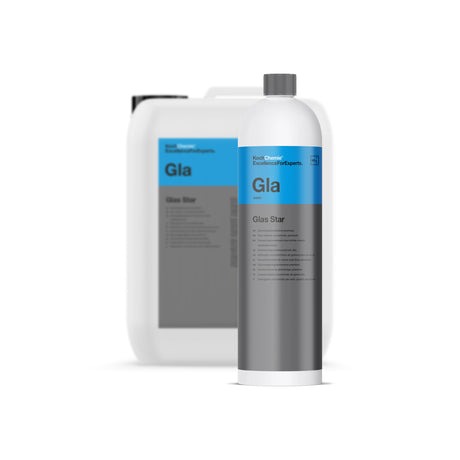
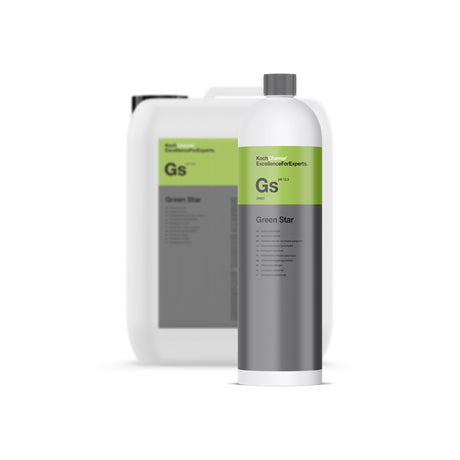
For a greasy film you need a cleaner that dissolves oil chemically, not water with a few surfactants. The Koch-Chemie Glas Star „Gla“ is an alcohol-based concentrate that breaks down oil, grease, silicone and wax residue streak-free.
Alcohol flashes off without residue and takes the loosened oils with it, instead of just shoving them around like a water-based cleaner does. The concentrate carries a Daimler approval and has been a detailing standard for years. You can run it neat or dilute it up to 1:3 with distilled water — never tap water, since its lime scale draws streaks of its own. That turns one litre of concentrate into up to four litres of spray solution, enough for around 130 glass jobs. When you mix it, water goes into the bottle first, then the concentrate, or you get a crown of foam that takes minutes to settle.
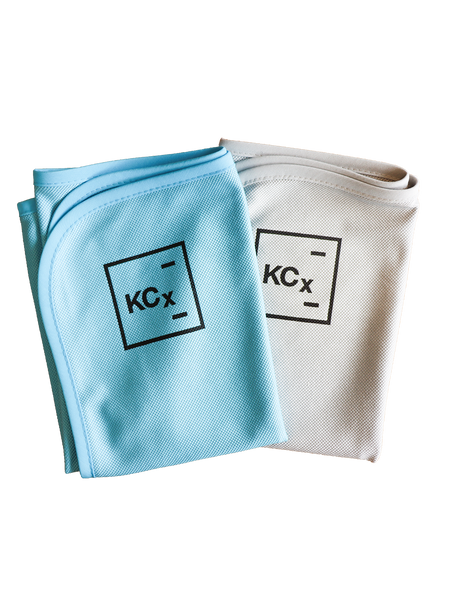
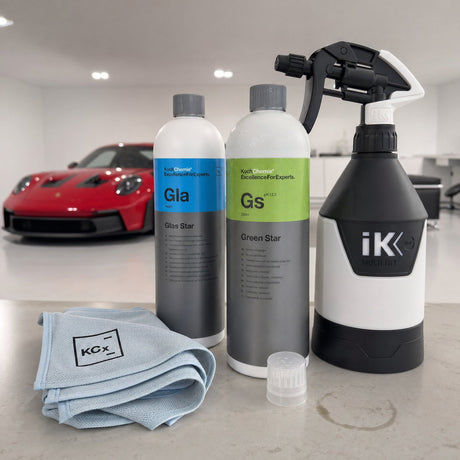
The cloth is no bit-part player. A fine glass microfibre cloth at 230 grams per square metre soaks up moisture instead of smearing it, and leaves no lint behind. An ordinary terry or kitchen towel lays down exactly the fibres you will then spot in the low sun. Want both together with an all-purpose cleaner for the rest of the cockpit? You will find it bundled in the Auto-Reinigungsset „Innenraum“. There is more to choose from in our glass cleaners and microfibre cloths.
Detailers agree across the board that dirt comes off the glass especially easily with the Glas Star, backed up by verified reviews on Trusted Shops. An honest limit belongs here all the same. The Glas Star is made for glass, mirrors and smooth surfaces, not for matt paint, wood trim or the raw edges of tint film. At those edges alcohol can attack the adhesive. So when you wipe the side windows, keep a little distance from the film edge, and the concentrate works exactly where it belongs.

Five mistakes that bring the haze straight back
Most inside screens are not cleaned badly, they are cleaned with the wrong kit. Five mistakes bring the haze back within a single drive, and all five are easy to avoid.
The first is ammonia household glass cleaner. It shines up for a moment, but it attacks tint film, head-up display surfaces and delicate coatings, and in the warm cabin it soon lays down a film again. The second is spraying straight onto the hot glass in the sun, where the cleaner dries on and the mist re-oils the dashboard at the same time. The third is kitchen roll or an old towel, which leaves lint and fine scratches.
The fourth mistake is invisible: a microfibre cloth washed with fabric softener. Softener leaves a greasy film on the fibres, and you wipe that straight onto the glass. So you wash glass cloths without softener and separately from your paint cloths. The fifth is circular wiping, which only redistributes the loosened film and creates the round swirls that light up in flat evening light.
A sixth one likes to sneak in: using the same spray bottle for cleaner and cockpit dressing. Leftover dressing then ends up on the glass the next time you reach for it. Keep the bottle for glass cleaner clean and separate, label it, and give it a quick rinse after you mix a fresh batch. Little effort, big payoff.
The costliest mistake sits behind all of them: the glossy silicone dash spray. It looks good for a bit, but it outgasses itself and feeds the glass with weeks of fresh supply for the next film. If you want the film gone for good, you start at the dashboard, not the glass.
Satin-matt plastic dressing saves you half the work
Keeping the glass clean means calming down the source of the film. A satin-matt, antistatic plastic dressing outgasses far less than glossy silicone oils and lets the cockpit shed less dust and grease onto the glass.
A dash dressed matt binds the plasticisers instead of releasing them into the cabin, and the antistatic effect means less dust settles on the surfaces and along the edge of the glass. That pushes the point where the screen fogs up again noticeably further back. How that works for the different interior plastics is in our guide to satin-matt plastic care inside the car.
Add plain old airing out. Crack the windows for a moment after a hot day before you fire up the air-con, and you let some of the outgassed stuff escape instead of letting it condense on the cold glass. And degrease the cockpit regularly with a suitable cleaner, and you do not hand the glass that much material to condense in the first place. How order drives the result across the whole interior is laid out in our guide on why streaks come from technique, not from the product.
Reckon on a full inside-glass clean of under five minutes if you do it once a month instead of letting it run all summer. Take the film early and you wipe away a thin layer. Wait, and by September you are scrubbing at a stubborn, yellowish film that costs you two passes and a lot more cleaner.

Detailing1-Insight: The best trick against the summer haze has nothing to do with the glass cleaner at all. At our Showroom in Nordhorn we keep seeing cars where the glass is milky again after two weeks, even though it was cleaned properly. The cause almost always sits in the high-gloss silicone spray that went on the dashboard beforehand. On one of our test cars, a dark cockpit, the glass only started fogging again after more than four weeks once we switched to a satin-matt dressing, instead of after a few days. Degrease the glass with Glas Star neat when the film is really stubborn, but dress the cockpit matt, or you are cleaning against a source you keep feeding yourself.
No time for the whole post? Get it summarized:
Add Detailing1 as a preferred source on Google